








FAQs
What does a managed IT services provider do for schools and universities?
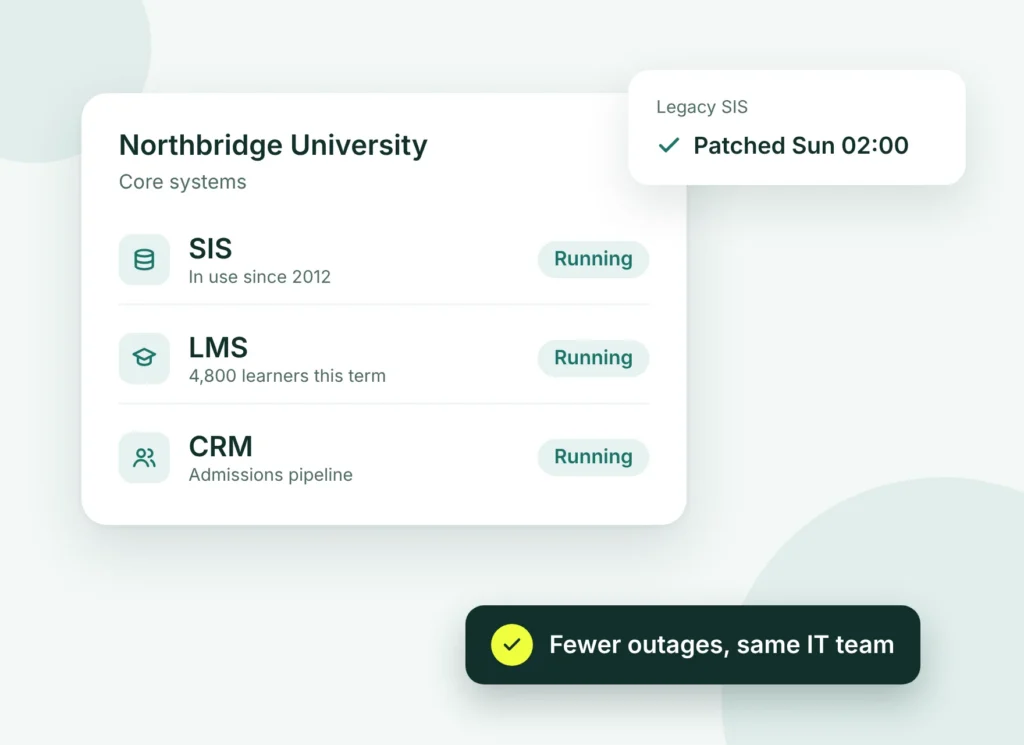
Think of it as an outside IT department with a contract behind it. The partner runs servers, networks, backups, security patches, and monitoring, and staffs a help desk for staff and learners. Scope is where providers differ. A general managed service provider often stops at laptops and the network. Education-focused partners go further, into the LMS, the student portal, and the SIS feeds behind them.
How is IT infrastructure managed services different for education vs. other industries?
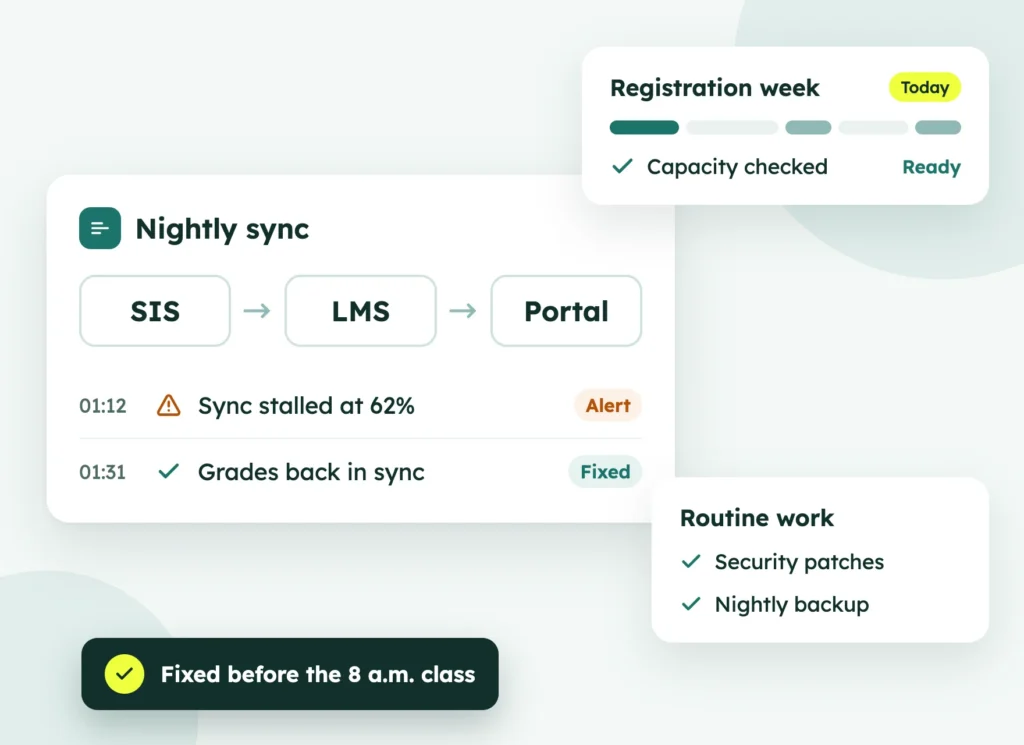
The calendar matters most. Peaks are predictable. Registration week and finals hit the same systems hard, so nobody patches a server the night before an exam. Compliance is the second difference: student records in the US fall under federal privacy law. Then there’s the churn. Thousands of accounts open and close each term, and a broken LMS-to-SIS sync fails silently.
What is included in a managed IT services contract for an educational institution?
Most contracts cover the routine work: monitoring, patching, backups with restore tests, security, user support, and a monthly report. Agreements for managed IT services for education list the systems in scope, such as the LMS, website, and education portal. Bigger jobs are different. A cloud migration, for instance, usually gets its own statement of work. Read the monthly report closely, because uptime and open tickets show whether the service earns its fee.
Can managed IT services support hybrid or remote learning environments?
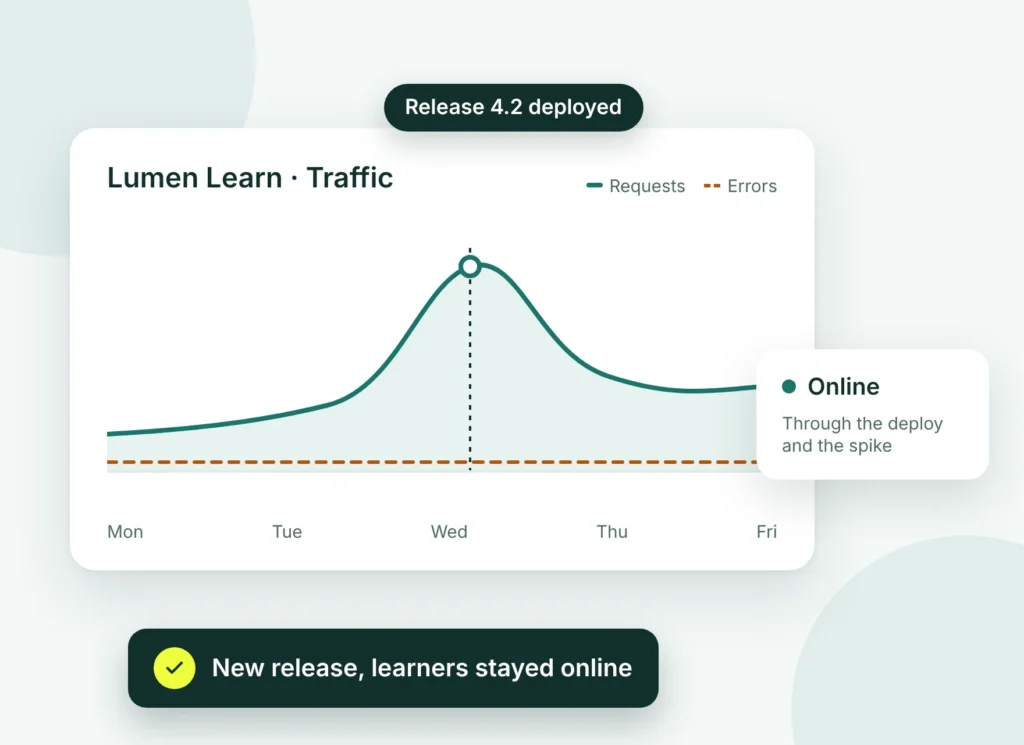
Yes. Remote learning leans on it more than most campus work does. With virtual desktop infrastructure, a student opens lab software from a kitchen table without installing anything. The managed team keeps the virtual learning environment and lecture recordings reachable off campus. Access rules travel with the user, from library to bedroom. Exam weeks are the real test. That’s when remote logins spike, and every minute of downtime gets noticed.
What engagement models does AnyforSoft offer for education IT management?
AnyforSoft works in three models. Fixed price fits a defined job, like a planned upgrade or a one-off troubleshooting task. A dedicated team means the same engineers run your infrastructure month after month. Time and materials suit work whose scope keeps moving. Through staff augmentation, AnyforSoft specialists can also join your own IT staff.
How quickly can you respond to an IT infrastructure incident or outage?
It depends on severity, and the SLA puts every tier in writing. Typical starting points:
- Critical (platform or LMS down, suspected data exposure): first response within 1 hour, with 24/7 support
- High (a major feature broken during term): within 4 business hours
- Normal (requests and minor issues): next business day
Both sides agree on the tiers before work starts. That way, the incident response follows a plan everyone already knows.
Do you support Higher Education, K-12, and corporate learning teams equally?
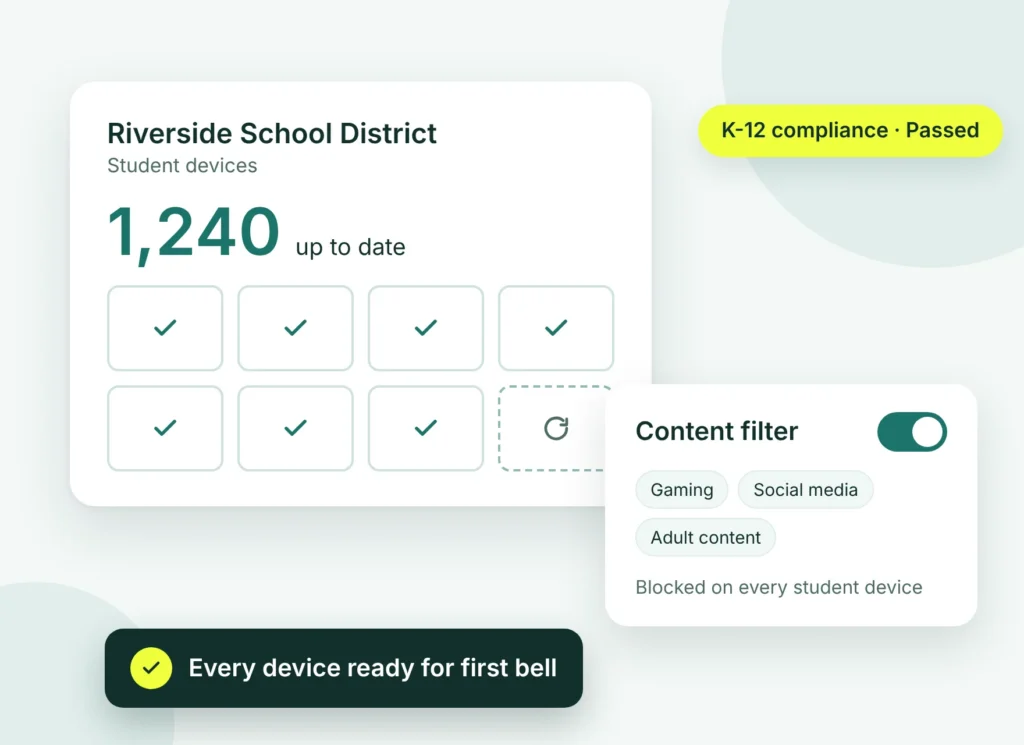
Equally, yes. The engineers and practices stay the same; what changes is the mix of systems. For universities, the risk sits in SIS and LMS links, so [higher education data management] gets most of the attention. Corporate learning teams worry about HR integrations. School districts need devices and content filtering covered by managed IT services for schools.
How do you ensure compliance with FERPA and student data privacy regulations?
By writing the rules down before anyone touches a system. From there, access follows each person’s role: an instructor sees grades for their own courses only. Records stay encrypted, both stored and in transit. Every access leaves an audit trail. Your registrar or compliance office keeps the final say over which roles can open which records.
How is AI changing IT infrastructure management for education?
Mostly by making detection faster. Models read server logs for odd patterns, sort alerts by urgency, and forecast how much capacity enrollment week will need. AnyforSoft brings in AI only where it removes real friction. The decisions stay human. Engineers review what the models flag and remain responsible for every change.
Can AI-powered monitoring reduce downtime and IT costs for schools and universities?
It can lower both. Early warnings on disk, memory, and traffic catch trouble before users do, so outages get shorter. Fewer 3 a.m. call-outs also mean lower overtime costs. How much you save depends on your setup. One pattern holds, though. Teams that learn about problems from user tickets pay twice: in downtime, then in rushed repairs.