

Corporate L&D, Associations and CE
Strategy & Discovery
Innovative education platforms
Build & Launch
Online training solutions
Grow & Support
Creative content & apps
Platform & Technology Expertise

E-Learning Software Development Services

Run your programs on learning software that fits how you teach
Some teams need a custom LMS; others need Moodle or Canvas to do more. AnyforSoft builds both for universities, EdTech companies, and L&D teams.

Book a free call
Partners, not just projects

Behind each logo is a long-standing relationship, built on trust as much as delivery.

What people say about us

Reviewed on Clutch
stars 4.9/5 rating
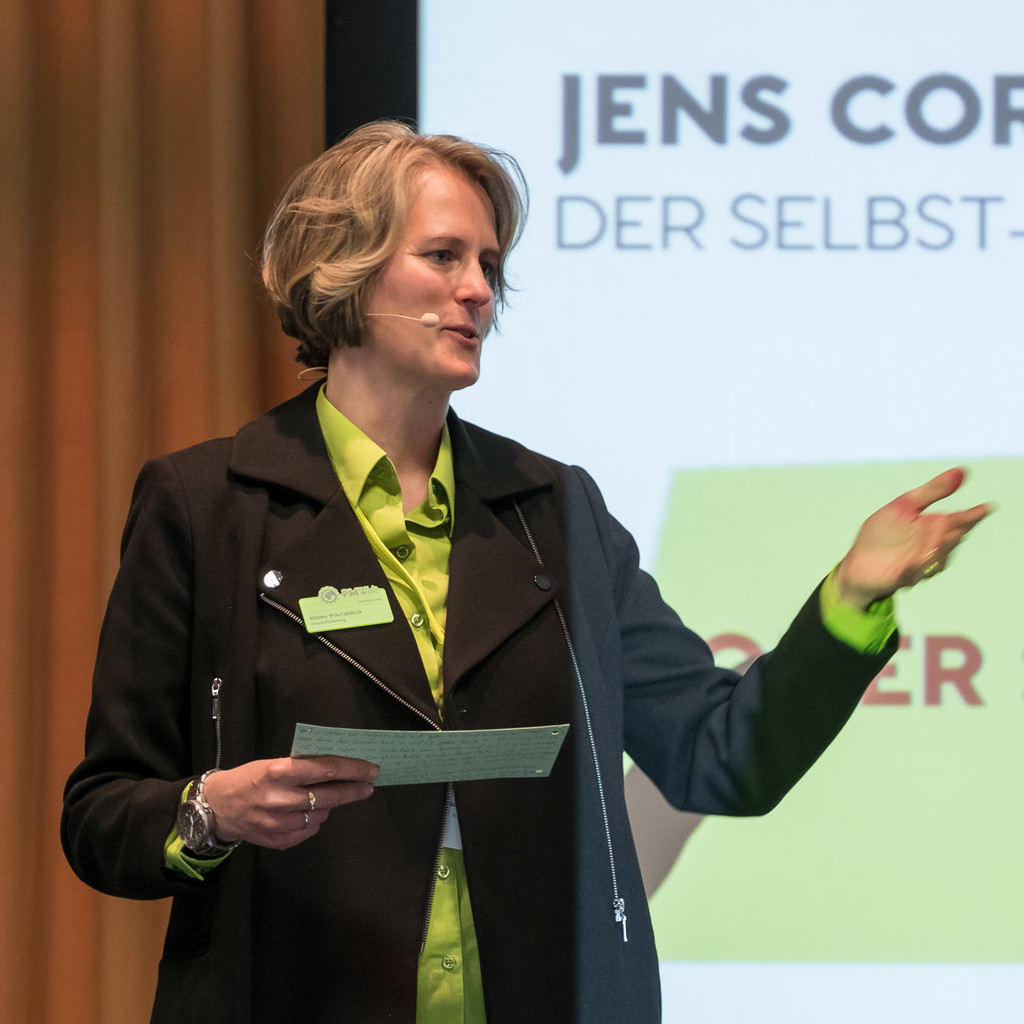
Regina Wolf-Berleb

Internal stakeholders are pleased with the heightened level of security that the new site
offers. AnyforSoft leveraged a collaborative approach to deliver an excellent product.
Customers can expect industry-leading services from a team that is knowledgeable,
efficient, and supportive.

Regina Wolf-Berleb

Where Off-the-Shelf Learning Platforms Start Holding Education Teams Back

Licensed products like Docebo sell one feature set to every buyer, and Moodle grows by stacking plugins. Either way, you work around the parts that do not fit.

Paying per seat for features nobody uses?

Your renewal invoice counts every learner seat, while instructors use a handful of the modules you pay for. With each new enrollment, per-seat licensing costs climb while the value stays flat.

Learners drop off before finishing courses?

One path serves every learner, so strong ones get bored and weak ones stall on the same module. Your course completion rates drop, and you answer for the numbers at review time.

Learning data stuck in disconnected systems?

Progress sits in the LMS, enrollment in the SIS or HRIS, and contacts in the CRM. Someone exports a spreadsheet every Monday to match them, and nobody trusts the totals by Friday.

Every platform update breaks your plugins?

A Moodle or Canvas upgrade changes the code that your third-party grading or certificate plugins depend on to run. They break, so the team skips upgrades.

Is a custom build right for your program?

Custom software is the right call when…An existing LMS may be enough when…
Per-seat fees grow faster than your training budgetLearner numbers hold steady and license costs stay predictable
Your grading, enrollment, or credit rules fit no product’s settingsStandard courses, quizzes, and certificates cover how you teach
Learning records must sync with your SIS, HRIS, or CRMFew systems connect, and a monthly export does the job
You sell the learning product and need its code and roadmapLearning supports your business, and you sell something else
Each Moodle or Canvas upgrade breaks plugins you depend onYour plugins update cleanly with every platform release

Education Organizations We Build E-Learning Software For

AnyforSoft creates and extends learning software around the systems each organization already runs.

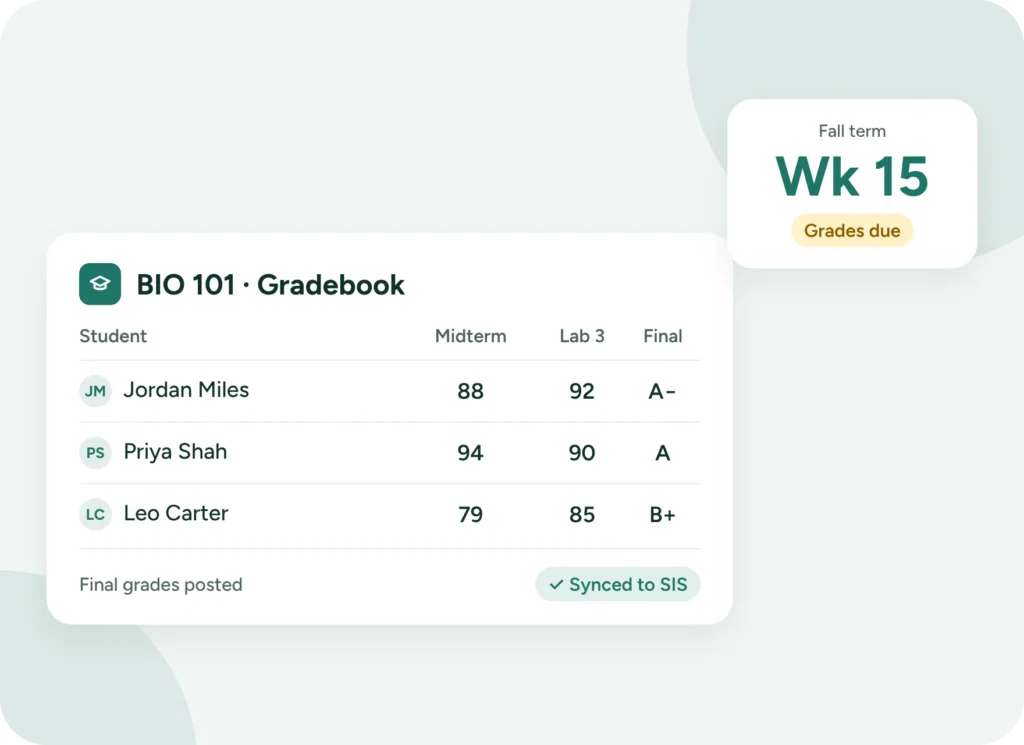
University gradebook with midterm, lab and final grades synced to the SIS

Higher Education

Academic technology teams at universities and colleges run Moodle or Canvas beside an SIS. They want rosters, grades, and hybrid courses in step every term.

EdTech Companies

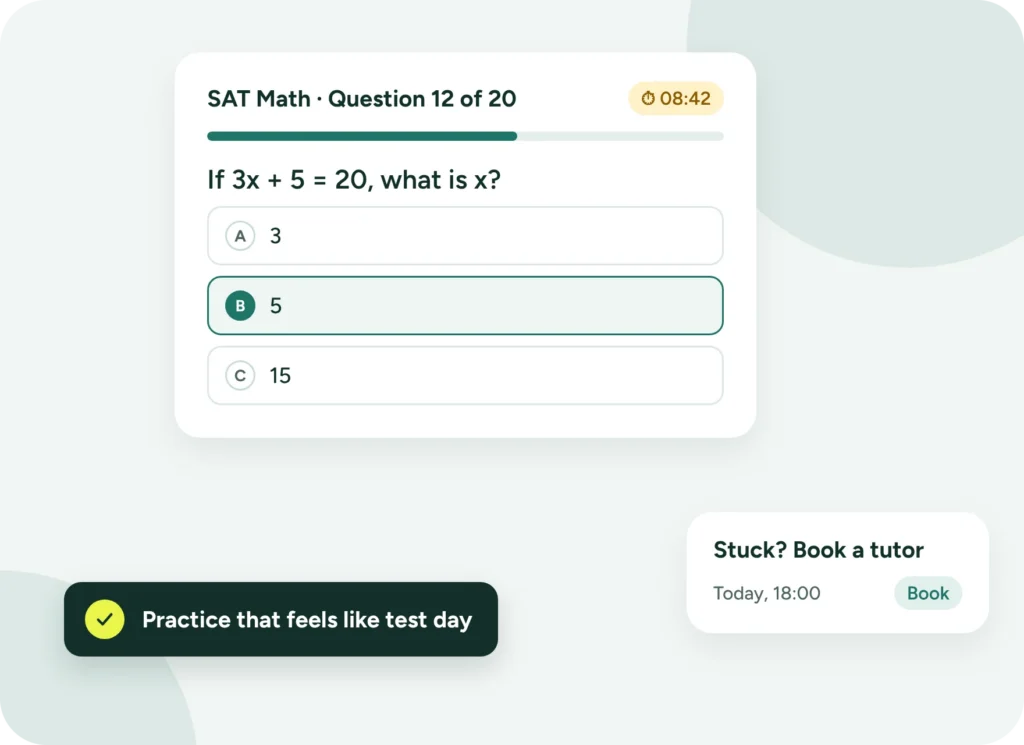
Founders of EdTech startups sell LMS, test prep, and tutor products. They need online learning platform development that ships features fast and scales without rewrites.

Timed SAT math practice question with a tutor booking card
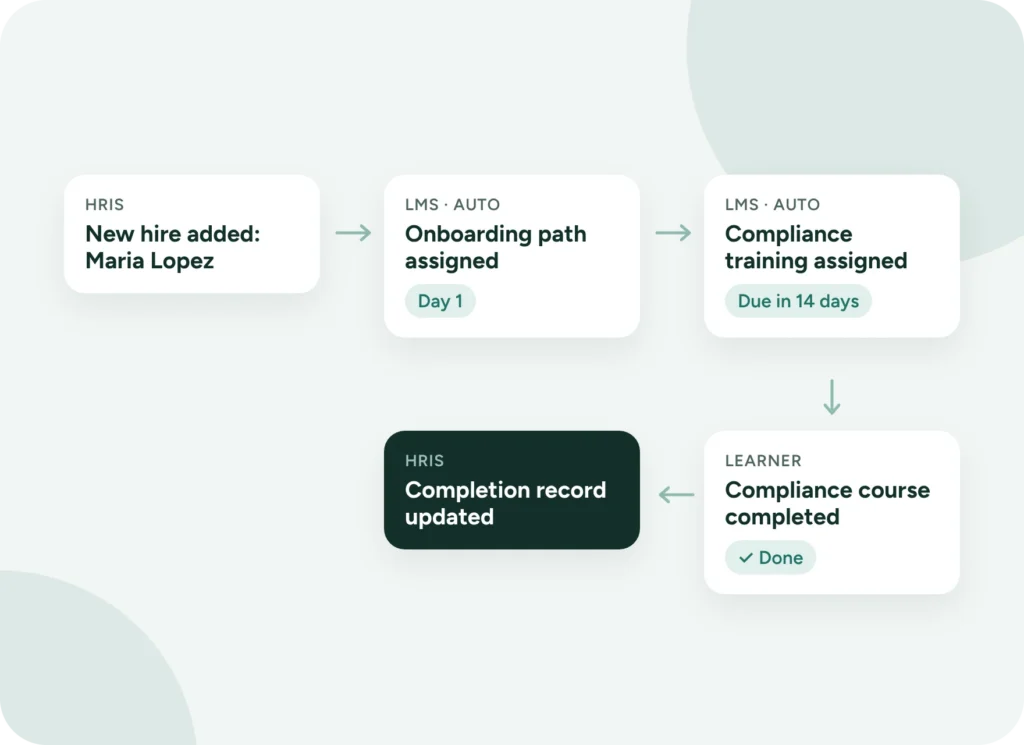
HRIS and LMS flow assigning onboarding and compliance training, then updating the completion record

Corporate L&D

When a new hire joins, the HR system should assign employee onboarding and compliance training on its own. Completion records then flow back without manual uploads.

Associations and Continuing Education

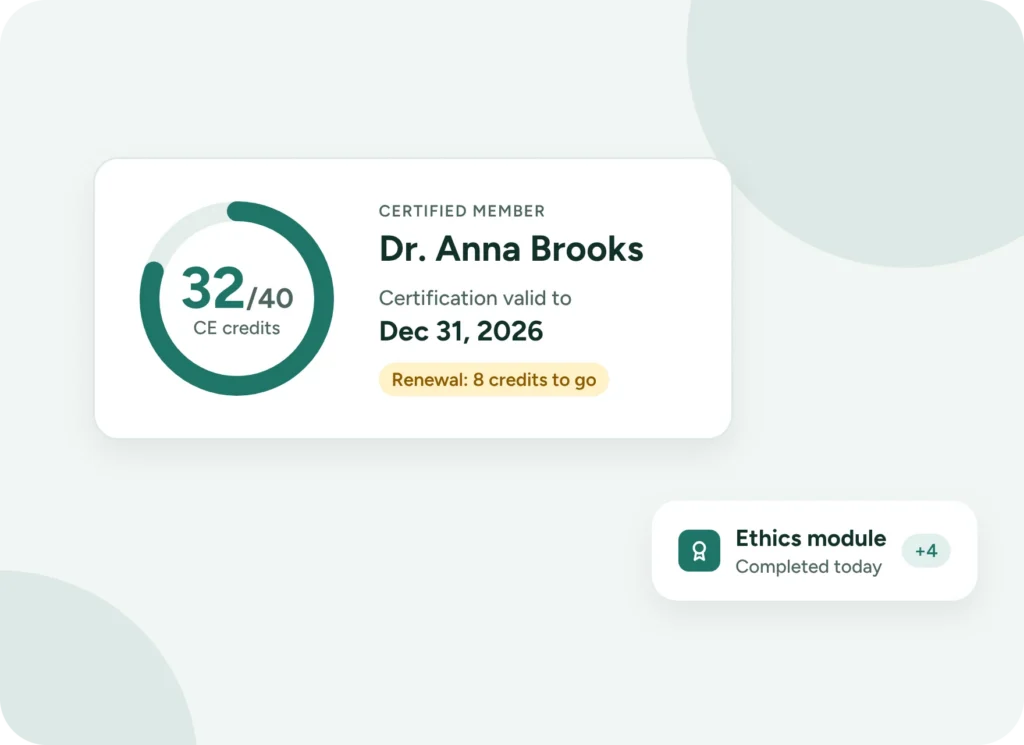
Members renew only when their CE credits add up. Associations running certification programs want credit tracking, renewals, and member records in one place.

Certified member card tracking CE credits toward certification renewal

E-Learning Solutions We Create

Our e-learning software development services fit education workflows, and every product we ship supports SCORM, xAPI, and LTI.

Learning Management Systems

Custom learning management systems follow your own enrollment rules, grading logic, and report formats. A generic LMS fixes those settings for every customer, so your staff bend the program to fit. Your registrar or training team stops exporting data to fix reports by hand.

Learning Experience Platforms

An LXP recommends each learner’s next module from their role, history, and goals, using rules admins set. A standard course catalog shows the same list to all users, including modules finished last year. AnyforSoft handles the e-learning platform development behind those recommendations, from data model to interface.

Assessment and Test Prep Platforms

AnyforSoft develops exam simulation that matches the real test’s interface, timing, and scoring rules. Generic LMS quizzes cannot copy them, so practice feels unlike test day. Inside the assessment platform, error-type tagging shows why each answer missed, and difficulty adapts per student.

Virtual Classrooms

Our virtual classroom software adds whiteboards, quick polls, quizzes, and chat to live sessions. They run on top of Zoom or another video service, so teachers keep the call they know. A bare video call lacks all four.

Content Authoring Tools

A built-in content authoring tool lets a teacher upload a short video, add a quiz, and publish in minutes. Separate authoring software means copying every lesson into the LMS by hand. Edits made inside the tool reach every course that uses the lesson, and version history records each change.

Mobile Learning Apps

Each mobile learning app gives learners offline lessons, reminders, and quick practice between classes. A responsive website cannot match that, least of all for people practicing a new language daily. AnyforSoft handles e-learning app development for iOS and Android, branded as your own product.

Custom E-Learning Software

Some programs fit no product category, such as microlearning for fast-paced industries or long-form certification for enterprise teams. For those, custom e-learning software development follows the model you already use. Learners reach it through one learning portal and login, with certificates, deadlines, and reports set by your rules.

LMS Platforms We Customize, Extend, and Integrate

Moodle

Plugins that survive upgrades:

  • Moodle development that fixes plugins after API changes
  • Upgrades go ahead without breaking grading tools

Canvas

New features, untouched core:

  • Plugins added without modifying the core
  • Registration changes reach courses automatically from the SIS

Open edX

Content types the defaults lack:

Drupal

Portals around your courses:

  • Catalogs and member portals built on Drupal
  • Work by Acquia Certified Developers

Three Ways to Get Your Learning Platform

You do not have to start from scratch. The right path depends on what already works, and custom e-learning solutions cover all three.

AnyforSoft recommends a path once it has seen your current setup and goals.

Extend Your Current LMS

Keep what works

Course delivery stays on Canvas, Thinkific, Kajabi, or the LMS you run today. AnyforSoft adds the assessment and reporting it cannot provide.

Best for: organizations whose LMS still works but lacks the features, integrations, or reporting they need.

Migrate to a Better Fit

A fresh fit, full history

An LMS migration moves courses, learner records, and grade history to a system that fits. Licenses nobody uses stop renewing at the next billing date.

Best for: teams that have outgrown their tools or pay for licenses they no longer need.

Build a Custom Platform

A product you own

Through custom LMS development, your learning model shapes the whole product. The e-learning platform development ends with full source code ownership on your side.

Best for: EdTech companies and institutions whose learning model no off-the-shelf product supports today.

Get 20% off the discovery phase
Discovery shows which of the three paths fits your case before you commit the budget.

Features of Our eLearning Software

Adaptive Learning Paths

AI notices what each learner skips and where they pause, then adjusts the route. One person gets two more examples; another moves ahead to the next module. Our AI solutions for education put these personalized learning paths into the course itself.

AI Tutors and Learning Assistants

A learner asks a question at 11 p.m. and gets an answer drawn from the course materials. The AI tutor passes anything it cannot answer to the instructor, with the question attached. Instructors start the morning with fewer repeat emails.

Learning Analytics Dashboards

Dashboards show completion and the point in a module where attention fades, while the course is still running. The system raises at-risk learner alerts when someone stops logging in. With predictive analytics, an instructor adjusts pacing or quiz timing before the group falls behind.

User and Role Management

Administrators manage instructors, learners, and reviewers from one screen, with no spreadsheet of who can see what. With role-based access, student records stay visible only to the roles that need them. A new instructor gets the right courses on day one.

Gamification and Social Learning

Badges and leaderboards give each finished module a visible reward. Under the lesson, a comment thread lets students post examples, share shortcuts, and argue about answers. That learner engagement shows up in who comes back the next day.

Cross-Device Learning

Laptop at work, tablet in the evening, phone on the train: the module picks up where you left it. Progress follows you, and microlearning lessons of a few minutes fit the phone screen. Our e-learning development services add that sync to the software on every device.

Why Universities, EdTech Companies, and L&D Teams Invest in Custom E-Learning Software

A licensed LMS serves its average customer. Each program that differs from that average pays twice: once in license fees, and again in staff workarounds. AnyforSoft’s own projects show what changes when that money goes into custom e-learning solutions. The figures below come from our clients’ reviews on Clutch.

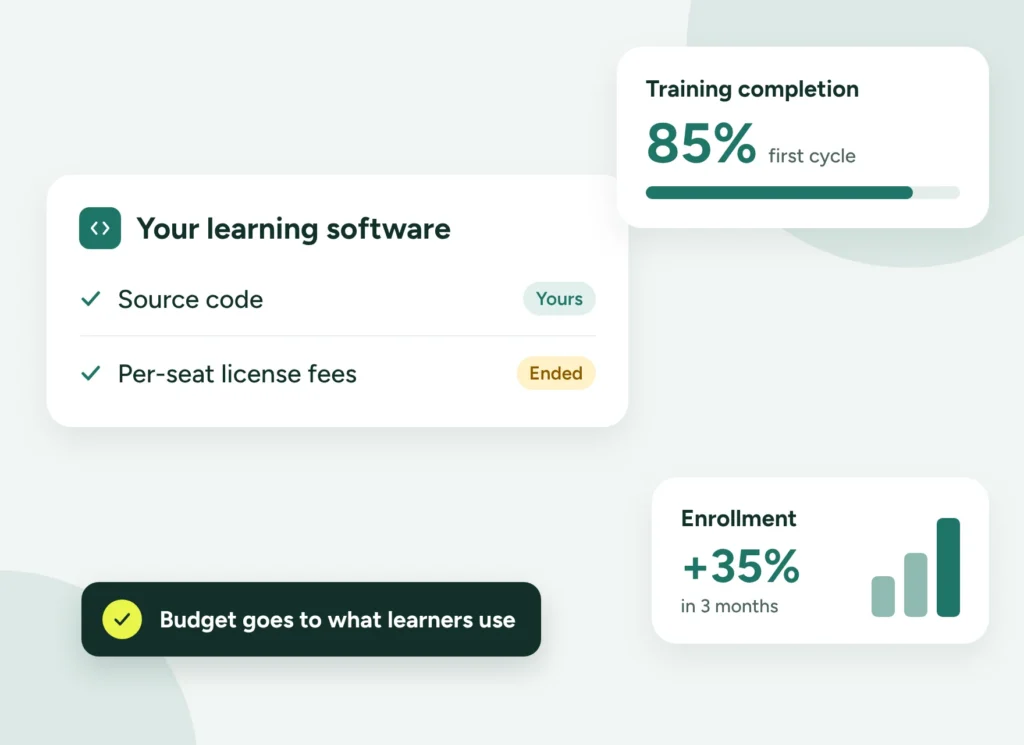
  • Per-seat fees end because the organization owns the software and its source code outright.
  • A MedTech client’s customized Moodle lifted training ROI, with an 85% completion rate in the first training cycle.
  • Connected HR systems cut compliance reporting to minutes, and one team saw training completion rates increased by about 30%.
  • Accessibility rules such as WCAG 2.2 and Section 508 shape the project from the start, so audits find fewer gaps.
  • New audiences find the training: one company reported student enrollment increased by 35% in three months.
  • EdTech companies that own their assessment and test prep platforms release features on their schedule, with scalability they control.

The organization stops paying for a licensed product’s limits and starts owning the software it depends on.

Owned learning software with no per-seat fees, 85% training completion and 35% enrollment growth

Our Technology Stack

We offer only well-recognized and time-tested technologies to support any of your business goals.

Back-end Databases CMS Front-end Mobile UI/UX tools
Next.JS Next.JS Node.JS Node.JS PHP PHP Symfony Symfony Django Django Python Python
Firebase Firebase Supabase Supabase
CSS CSS GATSBY GATSBY JQUERY JQUERY Angular Angular Graph QL Graph QL Jest Jest PWA PWA React React TypeScript TypeScript
Flutter Flutter PHP PHP
Acrobat Acrobat Adobe After Effects Adobe After Effects Adobe Illustrator Adobe Illustrator Adobe Photoshop Adobe Photoshop Avocode Avocode Figma Figma InVision InVision Sketch Sketch

How Does E-Learning Software Development Work at AnyforSoft?

1

Discovery and scoping

We use about two weeks of LMS consulting to set priorities and pick the path that fits
2

UX and prototyping

We turn the key screens into a working proof of concept within about a month, ready to test
3

Development and integrations

We write the code and connect it to the SIS, CRM, or HRIS you already run
4

Testing and accessibility

We run QA testing and accessibility checks on real devices before any learner logs in
5

Launch and migration

We launch at the agreed fixed price, move courses, and back the first 30 days with a warranty
6

Support and growth

We stay on as your product team as programs, exams, and enrollment change

Why Choose AnyforSoft for E-Learning Software Development

✔
Education domain depth

Our education software development covers universities too: WUAS runs an AI assistant we built to answer applicant and student questions.

✔
Senior LMS engineers

For a US tutoring company, proctoring and grading dropped from ~80% of a staffer’s time to ~10–15%.

✔
Code you own

You keep the source code and the product for good, with the option to host it yourself.

✔
Transparent delivery

You agree on scope and price up front. Estimates hold because our e-learning development company has rebuilt learning systems before.

Trusted edtech expertise, backed by numbers

15+
years in EdTech
150+
projects with a focus on education
80+
engineers

E-Learning Platforms We Built for Education Clients

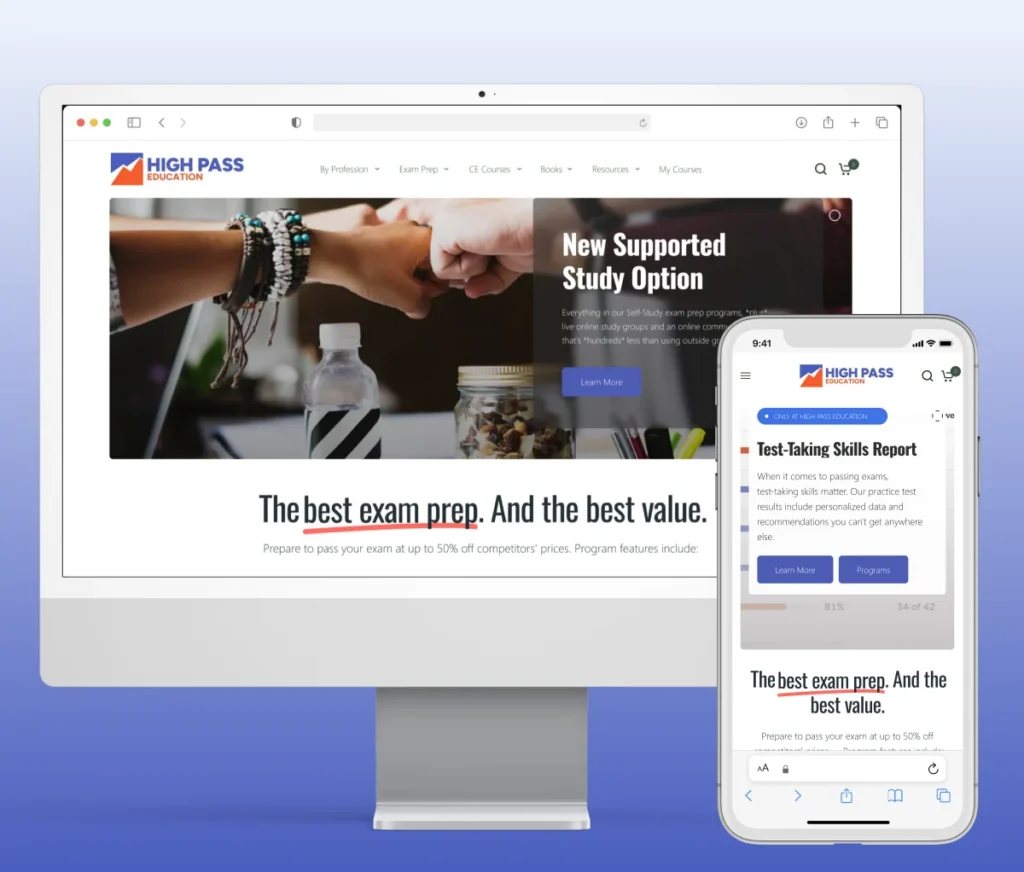
High Pass Education exam prep platform by AnyforSoft

High Pass Education launched a custom exam prep platform with personalized, analytics-driven study paths

High Pass Education prepares mental health professionals for the certification exams that private practice requires. Its courses ran on an existing LMS whose fixed tests and single scores could not show learners what to fix. AnyforSoft created a connected testing system with per-learner test settings and results compared across attempts.

  • Q1 2025: strongest first quarter to date, by the client’s own report
  • Within 5–20 seconds, user updates sync between the LMS and LTI tools
  • Program growth without adding instructional staff
  • Fewer one-to-one sessions for routine questions
  • Accessibility aligned with WCAG 2.1 across devices and browsers

A US tutoring company built its own SAT testing platform and eliminated manual grading

Since the 1980s, a US tutoring company has prepared students for standardized tests. Its SAT practice ran on printed tests, hand grading, and handwritten score reports. AnyforSoft digitized it on Open edX, with custom Python and React layers mirroring the official SAT app.

  • 3-day manual grading replaced by automatic scoring in seconds
  • 3 test modes, from timed exam conditions to untimed practice
  • Module difficulty that adapts to each student’s answers
  • PDF score reports with answers and time per question
  • Two-way data sync with Salesforce
Trust professionals with industry-specific expertise that care about your vision

FAQs

Can you customize our existing LMS, or do you only build from scratch?

Both. A lot of our work starts inside a system the client already runs. We add plugins and integrations around the untouched core, so your next upgrade doesn’t turn into a repair job. When a Moodle release changed its API, for example, we rewrote the affected plugin code to restore it. Starting over only makes sense when the current LMS can’t carry the program at all.

How long does it take to develop an e-learning platform?

Around five to six months for a fully custom solution, counted after the two planning stages. Extending an LMS you already run usually takes less, since much of the groundwork exists. Your time to launch depends on which path you pick:

  • Discovery: about 2 weeks
  • Proof of concept: about 1 month
  • Full build: about 5–6 months, at a fixed price

On the short end, a basic Moodle setup can be ready in 2–4 weeks.

How much does e-learning software development cost?

It depends on the path, but the first two steps have fixed starting prices:

  • Discovery: from $3K
  • Proof of concept: from $10K
  • Full product: at a fixed price

For Canvas work, we publish ranges too. A platform-based MVP lands between $25,000 and $80,000; a fully custom Canvas project starts at $300,000. The quote holds once discovery has fixed the scope.

Which LMS platforms and e-learning standards do you work with?

Moodle, Canvas, Open edX, and Drupal, plus the standards that connect them. Canvas development usually covers LTI tools and an SIS sync, and leaves the core alone. For content, builds support SCORM 1.2 and 2004 and xAPI, with an LRS storing the activity records. Tool launches in Canvas and Moodle run on LTI 1.3. If a program calls for cmi5, the team can add that support.

Do you work with universities, EdTech companies, and corporate training teams?

Yes, and with professional associations as well. Each group needs its own setup. Universities want courses tied to their SIS; companies want training records flowing into HR. Exam businesses and other test prep providers care about one thing above all: practice that feels like test day. AnyforSoft, an EdTech partner, offers e-learning software development services to all four, starting from the tools each one already runs.

Do you offer white-label e-learning solutions?

Yes. If the project sits on a ready-made product, we start with the branding it already offers. On Absorb LMS that means custom URLs and branded portals; Moodle Workplace adds multi-tenant setups for separate client groups. Sometimes that isn’t enough, and a custom white-label LMS carries your brand on every screen, certificate, and app. Learners see your logo from the login page onward.

Can the platform integrate with our SIS, CRM, or HRIS?

It can. We plan every connection before the architecture is set, because retrofitting one later costs more. Typical pairings: Salesforce or Slate on the CRM side, Workday or SAP SuccessFactors for HR. Learners log in once through SSO, and a change in the SIS updates course rosters by itself. Our LMS integration work covers payments and video sessions too.

How do you keep learner data secure and compliant with FERPA and GDPR?

The controls go in from day one. Each role sees only the records it needs, and audit logs show who opened what, and when. Logins go through multi-factor authentication. Under GDPR, retention rules delete user records after a set period. Your team owns the data privacy policy; the software enforces it, and your IT staff review the setup during discovery.

How can AI improve an e-learning platform without replacing instructors?

By taking the repetitive work and leaving judgment to people. Instructors decide where AI helps and where it stays out. An AI teaching assistant fields routine questions; automated grading handles objective items, and an instructor still reviews what it suggests. That frees hours for feedback and for the students who are falling behind. Two weeks after launch, one university’s admissions assistant was covering over 70% of student queries on its own.

Can you add AI features like adaptive learning or an AI tutor to our current LMS?

Usually, and your current setup stays put. A custom assistant answers recurring learner questions and hands complex cases to staff. Search can draw on your own course content, while AI content recommendations suggest what to study next. If policy demands it, the model runs on your institution’s own servers. Start with one course and measure the effect before you roll it out across the institution.


Tell Us About Your Learning Program and Get a Build Plan

Send us your audience, current system, and goals. We return a scope with a timeline range and a recommended path for our e-learning software development services.

Let’s talk
Vlad
Vlad

Business Development Manager

Anatolii
Anatolii

CEO