



















Other
Custom software & services
Strategy & Discovery
Innovative education platforms
Build & Launch
Online training solutions
Grow & Support
Creative content & apps
Platform & Technology Expertise

LMS Integration Services

Each platform your LMS connects with stores data in its own format, and those formats rarely align by default. Our engineers build connections around how your platforms actually store data and step in when either system updates.

Book a meeting
Trusted by companies globally

We’ve partnered with media and education companies across the globe. Our clients include industry giants like Verifone and Netscout.

What people say about us

Reviewed on Clutch
stars 4.9/5 rating
Ron Huber
Company logo
Internet & Technology
USA

I was pleasantly surprised by the quality of their developers, yet what I found the most impressive was their project management. AnyforSoft team took time to learn our expectations and technical needs. They’re a perfect size, big enough to provide quality resources, yet small enough for management to jump in when needed.

Ron Huber
LMS Integration Services

What is LMS integration and why does it matter?

This integration determines how well your learning platform fits into the systems your organization already depends on. Without it, learner data stays siloed and administrative work that should be automatic lands on your team instead.

What learning management system integration actually changes:

  • Enrollment tied to HR data means new hires start required training on day one instead of weeks after onboarding
  • Completion data pushed to your CRM gives sales managers visibility into which reps have finished product training before a product launch
  • Analytics connected to your reporting tools let leadership track training ROI without requesting manual exports from L&D
  • LMS and SSOintegration removes the need for separate learning platform credentials, which reduces the drop-off that happens when learners face one extra login between them and their course

How well your integrations are built determines whether your LMS works as core infrastructure or remains an isolated tool.

LMS Integration Solutions We Provide

Single Sign-On Solutions

When learners need separate credentials for their LMS, platform adoption drops before training begins. With SSO, users access their learning platform and connected tools with a single login, removing that barrier entirely.

Content Management Systems

Course materials stay accurate across your LMS and CMS when Drupal or WordPress sync your content pipeline automatically. Your team stops managing duplicate updates across platforms.

Gamification Tools

Adding progress mechanics and competitive elements to your LMS natively, gamification tools give learners structured reasons to complete courses. Return visits increase as learners track progress and compete within the platform.

HR and HCM Systems

For organizations running Workday, BambooHR, or SAP SuccessFactors, LMS HR integrations sync employee records automatically. New hires enter required training on schedule without manual enrollment from your L&D team.

Analytics Tools

Connecting your LMS with analytics platforms pushes learning metrics into the reporting tools your managers already use. Training impact becomes visible at the organizational level without manual exports from L&D.

Video Conferencing Solutions

Live training sessions reach learners inside the LMS when you connect with Zoom and other video conferencing tools. Instructors skip the manual work of reconciling attendance and completion records after each session.

eCommerce Platforms

Abandoned transactions often trace back to checkout flows that take learners outside the platform. LMS eCommerce integration with Shopify and WooCommerce keeps the full purchase experience inside your LMS, reducing drop-off between interest and completed checkout.

CRM systems

Inside the customer records your sales and support teams work from daily, LMS integration with Salesforce and other platforms surfaces relevant training automatically. Managers see which reps have the product knowledge needed before a campaign or product launch.

Payment & Subscription Systems

Connecting Stripe, PayPal, and Braintree handles billing and course access automatically inside your LMS. Renewals process on schedule without manual follow-up, keeping revenue continuous

Communication & Collaboration Tools

Slack, Microsoft Teams, and Notion deliver training updates and course reminders inside the platforms your teams already communicate through. Learners stay informed about required training without checking a separate system.

AI and Machine Learning Tools

Behavioral analytics, intelligent recommendations, and learner support is a dedicated layer between your learning platform and the AI tools. For Wittenborg University, we built an AI assistant that answers student questions using official university content. It gives the institution a scalable way to support applicants without increasing staff workload.

Connect your LMS with the tools you rely on. Tell us about your needs and Get 20% Off on the discovery phase!

Our technology stack

Back-end CMS Databases Front-end Mobile UI/UX tools
Next.JS Next.JS Node.JS Node.JS Symfony Symfony PHP PHP Django Django Python Python
Firebase Firebase Supabase Supabase
Angular Angular CSS CSS GATSBY GATSBY Graph QL Graph QL JQUERY JQUERY Jest Jest PWA PWA React React TypeScript TypeScript
Flutter Flutter PHP PHP
Acrobat Acrobat Adobe After Effects Adobe After Effects Adobe Illustrator Adobe Illustrator Adobe Photoshop Adobe Photoshop Avocode Avocode Figma Figma InVision InVision Sketch Sketch

Benefits of LMS integration services

Purpose-built connections reduce administrative overhead, strengthen compliance coverage, and keep your infrastructure flexible. It gives your leadership the data visibility to justify training investment.

  • Automated data flows eliminate manual record syncing, freeing your L&D team to focus on program quality rather than data management
  • LMS and CRM integration ties completion data to customer records, giving managers visibility into which reps have the product knowledge needed before launch
  • Automated enrollment tied to HR data ensures compliance coverage doesn’t develop gaps during high-volume hiring or reorganization
  • Adding new users or tools doesn’t require rebuilding your learning infrastructure when integrations are architected to scale
  • Modular connections mean you can replace individual platforms without rebuilding your entire LMS environment
Our LMS Integration Process

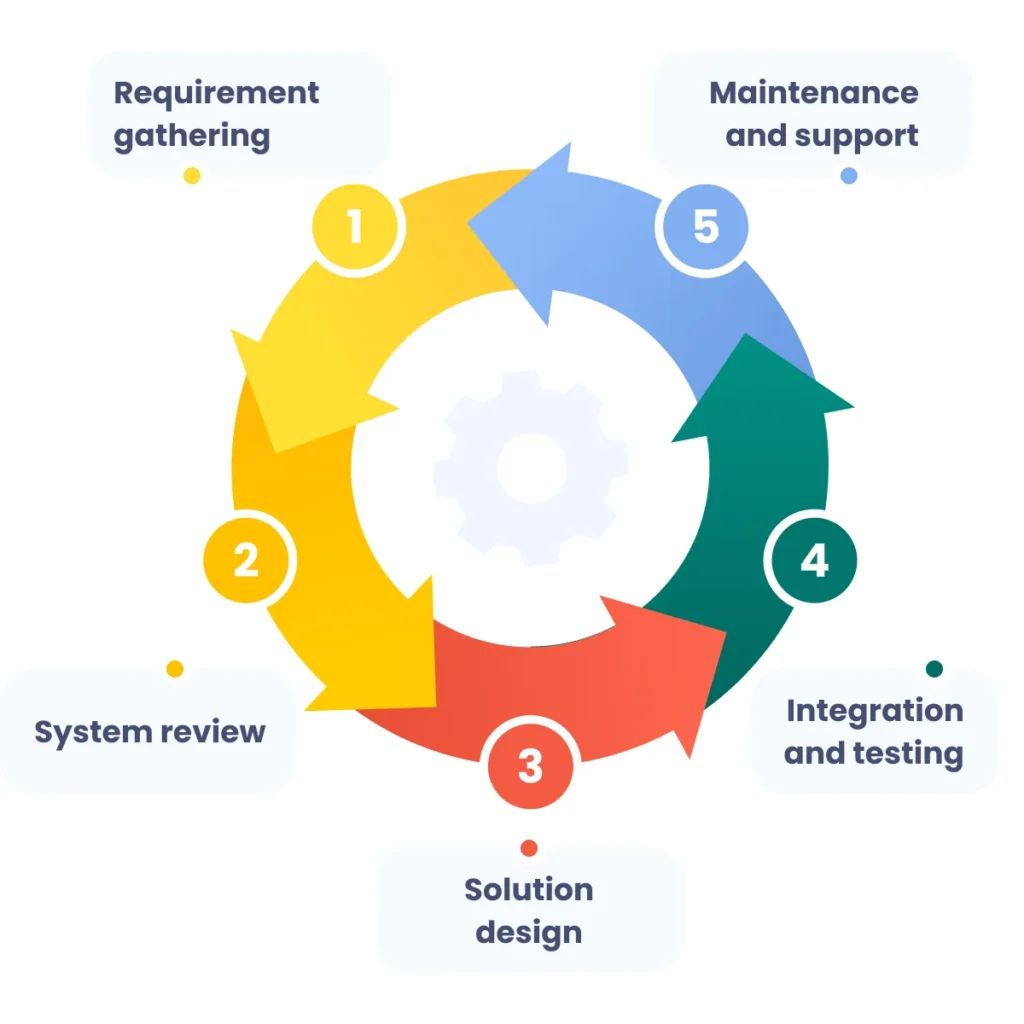
How We integrate LMSs with Third-Party Tools

1. Requirement gathering—We communicate with you and key stakeholders to understand your goals, vision, and technical requirements.

2. System review—Our team reviews your current LMS to determine its compatibility with other solutions and choose an appropriate integration method.

3. Solution design—We outline the data flows, identify endpoints, and specify any necessary connectors or middleware. Additionally, we develop a project timeline and establish testing criteria.

4. Integration and testing—We implement the planned integrations by connecting your LMS with other systems. Our team configures APIs, custom connectors, or middleware and tests every integration to ensure seamless data flow between systems. 

5. Maintenance and support—After the LMS connection is live, we provide ongoing maintenance and support to ensure long-term stability, security, and performance.

How we integrate LMSs with third-party tools

Requirement Gathering

A precise specification of data flows and connection methods, including APIs, webhooks, middleware, or native plugins, sets the technical foundation before lms integration services starts.

System Review

An architectural review of your LMS identifies compatibility requirements and potential conflict points. The findings determine which integration method fits your environment.

Solution Design

A precise specification of data flows and endpoints establishes the technical foundation. A project timeline and testing criteria are set before development starts

Integration and Testing

Custom connections between your LMS and target platforms are built and validated against real system behavior. No connection moves to production until it performs as specified.

Maintenance and Support

Continuous monitoring catches issues introduced by platform updates or API changes before they affect your users. Connections stay stable without your team tracking vendor changes.

Why choose AnyforSoft as your LMS integration service provider

15+ Years in EdTech

Most software development agencies treat LMS integration as a generic connectivity task. AnyforSoft’s experience is specific to education and learning platforms, from institutional university systems to corporate L&D infrastructure, which means fewer assumptions and faster problem-solving.

80+ Engineers, One Coordinated Team

Your integration project is backed by a project management office that tracks quality and consistency across every stage. A dedicated team covers architecture, LMS development, QA, and support without handoffs between vendors.

Estimates That Hold

LMS integration services scoping is done by engineers who have rebuilt complex learning systems before. The numbers stay consistent because the assumptions are grounded in real constraints, not optimistic projections.

150+ Custom Builds Delivered

Among AnyforSoft’s 150+ projects are integrations across the full EdTech spectrum,including a behavioral analytics layer built on Thinkific, a deep Salesforce and Open edX integration, and an AI assistant integrated into the university platform.

AI-Ready Integration Layer

With 10+ AI-powered products in production, AnyforSoft builds learning management system integrations that support future AI extensions, including behavioral analytics, personalization, and workflow automation. Existing connections don’t need rebuilding.

Support After Launch

When platform updates or API changes affect your integrations, AnyforSoft steps in. The team that built your connections stays available to maintain and adapt them as your systems evolve.

Enhance the functionality of your system with our LMS integration solutions

Deliver a seamless learning experience today

Optimize your learning experience, enhance the LMS’s functionality, and have important data at hand with custom LMS integrations. We’ll ensure your systems and applications work in tandem with other tools you use, creating a seamless workflow.

Let’s talk
Vlad
Vlad

Business Development Manager

Anatolii
Anatolii

CEO

FAQs

How long does LMS integration take?

The timeline of building LMS integration solutions depends on how many systems need connecting and how complex your data environment is:

  • Single connection (SSO or basic HR sync): 2–4 weeks
  • Multi-system projects with custom data mapping or middleware: 6–16 weeks
  • Enterprise-scale migrations or legacy system work: 16+ weeks

We agree on a timeline during the system review stage, before development begins, as a part of our LMS integration services. Share your project details and we’ll scope the work and estimate delivery.

Can you integrate any LMS with Salesforce?

Most modern LMS platforms support Salesforce integration via API or middleware. Feasibility depends on what your LMS exposes through its API and which data flows you need. 

Custom integration handles cases where native connectors don’t cover the required data flows.

For a private US tutoring company, we built a bidirectional Salesforce and Open edX integration that replaced manual data transfers and gave tutors a single view of each student’s progress. Share what you need from the LMS integration with Salesforce, and we’ll map out how to build it.

What's the difference between LMS API integration and LTI?

API integration connects your LMS to external systems by exchanging data directly between platforms. When your HR system needs to trigger automatic enrollment or push completion data into your CRM, API handles that connection.

LTI (Learning Tools Interoperability) is a standard for embedding external learning content inside an LMS without requiring a separate login. A third-party assessment tool or content library surfaces inside your platform through LTI without learners switching systems.

Some setups require both, when external content is delivered through LTI while completion data syncs back to your CRM through API.

Do you support SSO for LMS?

Yes. We work with major identity providers including Okta, Azure AD (which covers Microsoft 365 environments), and Google Workspace. Depending on your existing infrastructure and the number of connected tools, SSO setup adds 2–4 weeks to a project timeline.

How much does LMS integration cost?

LMS integration services scope drives the final number more than any single factor:

  • Single LMS-CRM integration integration: from $3,000–$5,000
  • Multi-system projects with custom data mapping and testing: $10,000–$25,000+
  • Enterprise-scale work with legacy systems or complex data structures: quoted individually

Every project is scoped before development begins, with a fixed estimate agreed upfront. Share your integration requirements and we’ll break down the costs for your specific setup.

AnyforSoft
Privacy Overview

This website uses cookies so that we can provide you with the best user experience possible. Cookie information is stored in your browser and performs functions such as recognising you when you return to our website and helping our team to understand which sections of the website you find most interesting and useful.