














Let’s talk

Purposeful Higher Education Website Development

Does your institution need a website? What about creating not just a website but a community — a circle of students, applicants, parents, professors, and alumni?
We’ll build such a network, and let the website be your launching pad!

Book a meeting
tutor-app-development-services

What people say about us

I was pleasantly surprised by the quality of their developers, yet what I found the most impressive was their project management. AnyforSoft team took time to learn our expectations and technical needs. They’re a perfect size, big enough to provide quality resources, yet small enough for management to jump in when needed.

Show more
Ron Huber

Higher education website is not like any other

It must meet special requirements, from higher education web design to compliance. The smallest details impact visitors’ engagement and retention; this is how higher education web development works.

Multi-audience navigation

Multi-audience navigation

Multi-audience navigation

As a part of higher ed web design dimensions, it serves diverse users, including prospective students, current students, faculty, staff, and alumni. Aligns all these audiences’ experience with their unique pathways.

Strict compliance standards

Strict compliance standards

Strict compliance standards

Must meet several compliance requirements. The key ones include ADA/WCAG for accessibility, FERPA/GDPR for data protection, and HIPAA for student health information security.

Complex system integrations

Complex system integrations

Complex system integrations

Connects with LMS, faculty portals, research databases, and payment systems for seamless functionality.

Scalability & high-traffic handling

Scalability & high-traffic handling

Scalability & high-traffic handling

Supports thousands of simultaneous users, especially during peak times (enrollment, course registration, campus events).

Content longevity & governance

Content longevity & governance

Content longevity & governance

Manages long-term academic records, policies, and research publications with structured updates and archival processes.

SEO & online presence for academia

SEO & online presence for academia

SEO & online presence for academia

Prioritizes program visibility, faculty research discoverability, and global academic rankings over traditional marketing tactics.

Features? Concise functionality aligned with goals

Information hub

Goal: Ensure all segments of users, including students, faculty, and the public, easily get information they need.

Features:

  • Smart search & navigation for quick access to programs and faculty
  • Resource libraries (catalogs, archives, policies)
  • WCAG/ADA-compliant design
  • Real-time event calendars

Institutional branding

Goal: Strengthen brand identity, showcase achievements, and attract prospective students.

Features:

  • Custom branding & storytelling (mission, values, success stories)
  • SEO-optimized pages
  • Virtual tours & interactive maps
  • Social media & multimedia integration

Student enrollment

Goal: Simplify and streamline the enrollment process to increase conversion rates.

Features:

  • Online applications with document uploads & tracking
  • Tuition & financial aid calculators
  • AI chatbots for admissions FAQs
  • Automated follow-ups & inquiry forms

Content management

Goal: Enable non-technical staff and faculty to easily update content.

Features:

  • User-friendly CMS with role-based access
  • Editorial workflows & version control
  • Automated archiving & updates
  • Multimedia support (videos, infographics, research)

Communication channels

Goal: Foster seamless interaction between students, faculty, alumni, and administration.

  • Student & faculty portals with dashboards
  • Email & notifications for updates
  • Forums & live Q&A sessions
  • Alumni networking & donation platform.

Program & Degree Finder with Filters

Goal: Help users quickly discover relevant programs and degrees that match their academic interests and goals.

Features:

  • Advanced search with category, faculty, and degree-level filters
  • Dynamic program pages with integrated course outlines and career outcomes
  • Tag-based navigation for cross-departmental programs
  • Easy comparison between similar programs

Newsroom, Events & Campus Stories

Goal: Keep your digital campus vibrant by sharing what’s happening across your institution.

Features:

  • News hub with filtering by topic or department
  • Dynamic event calendars with registration options
  • Press releases and media kits
  • Storytelling modules highlighting faculty research, alumni achievements, and campus life

Admissions & Apply Flows with Conversion Tracking

Goal: Simplify the admissions journey and improve application conversion rates.

Features:

  • Step-by-step admissions flows for different programs
  • Conversion tracking dashboards for application funnels
  • CRM and analytics integration for lead scoring and nurturing
  • Personalized user journeys for prospective students

Multi-Campus & Multi-Site Management

Goal: Manage multiple campuses, faculties, or departments from a single unified system.

Features:

  • Centralized CMS with multi-site management
  • Role-based permissions for individual campuses
  • Shared content libraries with cross-campus synchronization
  • Configurable branding for each campus or faculty site

Multilingual & Internationalization Support

Goal: Engage global audiences and support international recruitment goals.

Features:

  • Multilingual architecture with easy content translation workflows
  • RTL (right-to-left) language compatibility
  • Localized SEO optimization
  • Geo-targeted content display for international users

Seven essential services for a five-star higher ed website

01 Custom higher ed web development

Seamless navigation, intuitive UX, smart higher ed website design, and high performance are negotiables. Your website makes a lasting impression — easy to remember and hard to forget. The experience feels natural and logical. The design is both elegant and creative.

02 System integration & API development

SIS, LMS, CRMs, payment gateways—your higher ed website must connect with numerous third-party tools. The biggest advantage—and greatest responsibility—is ensuring secure data exchange. Our solutions seamlessly combine efficiency with strict data protection standards.

03 Website migration & modernization

We’ll transition you to a new platform without losses—because we meticulously prepare for every step. Comprehensive audit, integrity checks, SEO preservation strategy—these are just part of our thorough approach.

04 Compliance & security optimization

Our top priority is safeguarding sensitive information while ensuring seamless user access. Our solutions combine robust security, legal compliance, and optimal performance without compromise. Accessibility and data security requirements are our North Star.

05 UX/UI Design

Because higher education websites serve multiple audiences simultaneously, design complexity multiplies fast. Students need program information, parents want cost breakdowns, alumni, in turn, seek networking opportunities. We build user-friendly interfaces tailored to each group while maintaining consistency. Visitors engage from arrival through conversion without hitting dead ends.

06 Content Strategy

Your website’s content reflects your institution’s voice. We help you organize it effectively. We match messaging with enrollment goals, SEO visibility, and brand storytelling. From academic program descriptions to research showcases, our content strategies make sure every page has a clear purpose and speaks to your audience honestly.

07 AI features implementation

We integrate AI-powered features into the workflows that need speeding up and automating the routine. Examples of tools include personalized course recommendations, intelligent search tools, predictive analytics, and virtual assistants.The expected outcomes are enhanced user engagement and streamlined administrative processes.


Partner Up With A Company That Designs Successful College Or University Websites!

Technology stack

Back-end CMS Databases Front-end Mobile UI/UX tools
Django Django Next.JS Next.JS Node.JS Node.JS PHP PHP Symfony Symfony Python Python
Firebase Firebase Supabase Supabase
Angular Angular CSS CSS GATSBY GATSBY Graph QL Graph QL Jest Jest JQUERY JQUERY PWA PWA React React TypeScript TypeScript
Flutter Flutter PHP PHP
Acrobat Acrobat Adobe After Effects Adobe After Effects Adobe Illustrator Adobe Illustrator Adobe Photoshop Adobe Photoshop Avocode Avocode Figma Figma InVision InVision Sketch Sketch

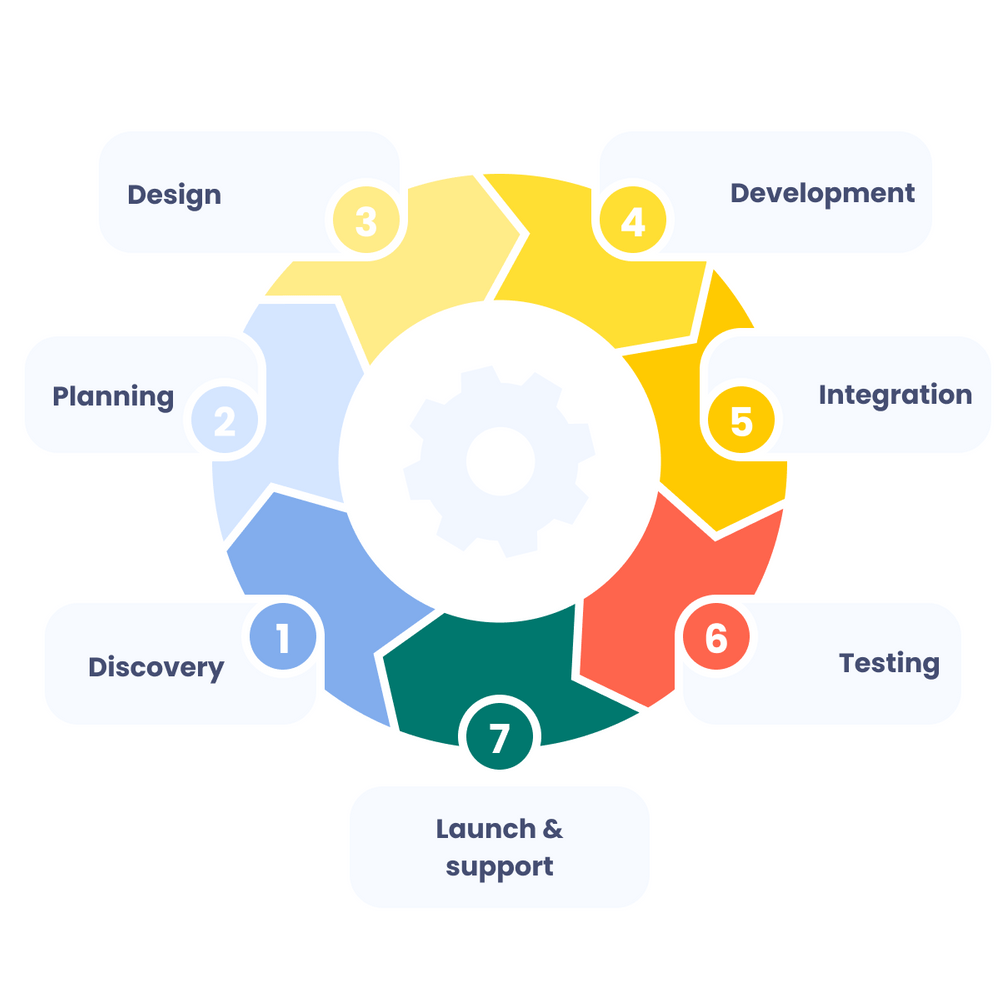
Higher ed website creation process

Creating a website for a university requires a bit of finesse, a bit of teamwork, and a deep understanding of what higher ed is all about. At AnyforSoft, we follow a tried-and-tested higher education web development process to make sure that our sites align with the goals of the institution and deliver the results that you need.

Step 1: Discovery & Research

In a university website design company, understanding your institution’s goals comes first. We dig into stakeholder priorities, map how users currently navigate your digital presence, review systems that need connecting. Integration requirements surface, performance indicators get defined early. You’ll know this stage worked when you see a roadmap where every technical decision ties directly back to enrollment targets and institutional mission, not generic best practices.

Step 2: Web Design for Higher Education & Prototyping

Design translates all that research into prototypes you can actually interact with. Students hunting for programs need different pathways than faculty accessing resources or alumni seeking connections. Navigation stays intuitive, accessibility gets baked into wireframes from day one. The proof? You test interactive prototypes yourself before developers write a single line of code.

Step 3: Development & Integrations

Performance, scalability, security—these shape every commit. Your LMS talks to the SIS, CRM syncs with payment gateways, everything connects without creating data vulnerabilities. Progress updates arrive regularly with functional modules you can click through and evaluate, not status reports filled with jargon about “ongoing implementation activities.”

Step 4: Testing & Quality Assurance

Testing happens obsessively before anyone outside your team sees the site. Devices, user roles, accessibility standards, traffic loads under pressure. Functional tests catch breaks, usability reviews find friction, security audits identify risks. The deliverable? Documentation proving WCAG compliance, performance benchmarks, evidence the site works for every user group you serve.

Step 5: Launch & Optimization

Going live is day one, never the finish line. Real users behave differently than we predict they will. We monitor actual behavior, track where conversions happen and where visitors bail, optimize content as search algorithms shift. Regular analytics reports show what’s working and what needs adjustment as your priorities evolve.

Why choose AnyforSoft as a higher ed website development partner?

Deep expertise in the education field

Creating websites for higher education is our forte. Website redesign for an international university, smooth migration of a complex educational portal, and maintenance for a prestigious business school are just a few examples of our higher education web developers’ expertise.

ML engineers team

Considering personal course recommendations, a virtual assistant, or an intelligent search tool on your website? You’re on the right track, given that 93% of higher ed professionals plan to expand AI use in the next two years (according to Ellucian). We’ll implement AI-powered features for you!

SEO optimization specialization

To bring you traffic that converts into loyal, enrolled students, your website must rank high in search engines. We’re strong in both technical SEO and content optimization, and our deep expertise enables us to create high-converting websites for higher education institutions.

Success stories

Educational institution website

Educational institution website

CLIENT
MEGU
COUNTRY
Ukraine
INDUSTRY
Education

The Strategic Value of Higher Education Website Development

What value can you expect from a solution that represents your institution both in academia and the competitive education market? Meeting the highest standards is a given—it requires expertise and experience, the kind that AnyforSoft brings to every project.

  • Student enrollment. A streamlined website simplifies enrollment, boosting conversion rates. Personalized application workflows and financial aid tools help students make quick, informed decisions.
  • Administrative automation. Automation reduces manual workloads, streamlining applications, course registration, and student records. 
  • Reputation. A strong digital presence builds credibility by showcasing faculty, research, and success stories. This reinforces trust among students, partners, and academia.
  • Fundraising. Alumni portals and networking tools strengthen lifelong connections. Integrated donation systems and impact-driven campaigns drive fundraising success.
  • SEO visibility. SEO-optimized content boosts visibility and organic traffic. Faculty profiles, research publications, and structured data enhance long-term discoverability.

Accessibility, Compliance & Security – The Heart of Our Educational Websites

Accessibility and data protection are right at the top of our list when it comes to building educational websites. We make sure that your platform is not only inclusive but also compliant and secure against the threats that are always popping up – because trust and accessibility are what it’s all about when it comes to getting an education.

WCAG 2.2 AA Standards – Audits, Not a One-Off Job

WCAG 2.2 AA Standards - Audits, Not a One-Off Job

WCAG 2.2 AA Standards – Audits, Not a One-Off Job

When we design and test every part of your site, we’re working to the WCAG 2.2 AA guidelines – that’s to say we’re making sure that it’s accessible to everyone, not just those who can afford a bit of extra effort. And it’s not a one-off job – we do regular audits and usability reviews to make sure that stays the case even after the site goes live.

Making Media Accessible – PDF/Media Remediation & Captioning Workflows

Making Media Accessible - PDF/Media Remediation & Captioning Workflows

Making Media Accessible – PDF/Media Remediation & Captioning Workflows

From downloadable PDFs to video lectures – we’ve got a process for making all your media content accessible. That includes things like automated captioning, transcript generation and making sure all your documents are set up in a way that’s easy for people to use.

FERPA/GDPR Considerations, SSO (SAML/OAuth) – We Get Compliance

FERPA/GDPR Considerations, SSO (SAML/OAuth) - We Get Compliance

FERPA/GDPR Considerations, SSO (SAML/OAuth) – We Get Compliance

Compliance with FERPA and GDPR is a must for us. We sort that out as part of our development process, and we also set up secure Single Sign-On (SSO) solutions that make it easy for people to log in and keep their details safe across all the different systems they use.

Securing Your Site – Pen-Testing & More

Securing Your Site - Pen-Testing & More

Securing Your Site – Pen-Testing & More

Our security process is as robust as it is rigorous. It includes things like penetration testing, dynamic application security testing, and software composition analysis – all with the aim of making sure that your site is as secure as possible and that we’re not leaving any vulnerabilities to be exploited.

FAQs

How is the development of a higher education website different from other types of websites?

At first glance, most websites look alike — but not for a website development agency for higher education. A website for a university doesn’t just share information; it represents identity, inspires trust, and builds a bridge between generations of learners.

An e-commerce site focuses on conversion. A corporate site supports branding. A higher education website must do both while also serving students, faculty, and alumni. It’s a living system that grows, changes, and carries the weight of reputation and compliance.

Here’s where higher education websites stand apart:

  • Multilayered audience. Universities speak to multiple groups at once — students, faculty, staff, alumni, researchers. Each has its own goals, language, and expectations. One group needs quick enrollment details, another wants access to publications, while faculty search for internal tools. If content is too broad, it loses relevance; if too narrow, it excludes someone important. The best designs quietly balance both.
  • User experience (UX) design. Navigation shapes behavior. A well-designed portal guides people without making them think about where to click next. It adapts to different users and adjusts gracefully across devices. Mobile-first design isn’t an upgrade anymore; it’s a baseline expectation. Great UX in education often disappears into the background, invisible but deeply felt.
  • Website architecture and integrations. Behind the calm surface sits a network of systems. The front end holds course catalogs, research results, and event calendars. The back end connects to SIS, LMS, and payment gateways, often across multiple departments. Add modern layers, such as AI chatbots, virtual tours, intelligent search, and you realize how much orchestration it takes to make complexity look effortless.
  • Compliance and security. Few sectors carry as much responsibility for data and accessibility as education. ADA and WCAG standards ensure inclusivity for every learner. FERPA and GDPR protect privacy and accountability. Security measures must evolve constantly because the information handled is personal and permanent. A small lapse here can echo for years.

For a higher education website design agency, creating a higher education website is equal parts architecture and empathy. It’s about turning institutional purpose into a digital experience that welcomes everyone and loses no one. That’s why working with an experienced team is a safeguard. The right expertise shortens the path, reduces cost, and produces something that feels intuitive from the first click.

Designing a website for higher education is never routine. It has to bridge audiences that think, act, and decide differently — all within the same digital space. Students want to explore programs quickly. Parents look for evidence that their children will be safe and supported. Faculty members expect efficiency when submitting grades or sharing research, while alumni hope to stay connected to the community that shaped them. A site that satisfies all of them feels almost invisible — everything just works.

We can look at the differences on two levels.

  • Psychological and marketing factors. A university website is both an introduction and a promise. It has to capture curiosity and build trust at the same moment. Engaging visuals can draw a visitor in, but relevance keeps them there. Future students often head straight for program finders, tuition calculators, or virtual campus tours. Parents look for accreditation pages and student success stories. Faculty may check the research hub or internal teaching portal. Each interaction communicates reliability. A misaligned tone or confusing navigation can undo months of recruitment effort. The goal is to make every audience feel that this institution sees them — and speaks their language.
  • Technical factors. The architecture behind a higher education site is far more layered than it appears. Personalized dashboards pull data from multiple systems at once: SIS for enrollment, LMS for course content, CRM for admissions. A prospective student might compare programs using an intelligent search tool powered by structured taxonomies, while a professor uploads new publications to a digital repository integrated with ORCID. Each connection saves time and reduces friction. Speed, accuracy, and data integrity shape how users judge the institution itself.

General web templates cannot replicate this depth, from a higher education web development agency point of view. A corporate site can live without course catalogs or publication indexes; a university cannot. The difference lies in purpose: academic websites are ecosystems, not brochures.

This blend of empathy and engineering defines higher education web design. It’s not just about making a site attractive; it’s about turning digital complexity into something that feels simple, even human. Working with a team experienced in higher ed systems means fewer compromises, faster launches, and a result that honors the institution’s identity while serving every group that depends on it.

The truth is, there is no neat answer. Every university site tells its own story. Some aim to inspire future students, others to showcase groundbreaking research, and many to do both. Each of these goals affects how much time, skill, and collaboration it takes to bring the vision online. Numbers come later; understanding comes first.

That understanding starts during what developers call the discovery phase. It’s less about paperwork and more about asking the right questions: What does the institution want people to feel when they visit? How many systems need to speak to one another? How many audiences must the site serve? During discovery, ideas turn into architecture. Timelines emerge. The budget begins to take shape not as a guess, but as a roadmap.

Skipping this phase is like building on soft ground — the structure might stand, but not for long. For universities with multiple integrations or advanced tools like AI assistants, a thoughtful discovery process is what keeps ambition realistic and results sustainable.

Once the groundwork is in place, the cost landscape becomes clearer.

  • Basic higher education website ($20,000–$40,000). This level fits institutions that need a professional digital presence without complex integrations. Think of clear design, solid CMS, event calendars, SEO setup, and mobile optimization. It’s straightforward but far from simplistic — a strong base for smaller colleges or departments that value stability and polish.
  • Medium-complexity website ($40,000–$80,000). This tier supports deeper functionality. It often includes portals for students and faculty, course catalogs, and application systems tied to admissions. Role-based CMS, SIS and LMS integrations, and accessibility compliance ensure both structure and inclusivity. It’s where digital identity meets operational reality.
  • Comprehensive digital platform ($80,000–$150,000+). Large universities or research-driven institutions often invest here. AI chatbots answer admission queries before staff need to. Smart search tools help students navigate hundreds of programs. Predictive analytics track engagement and retention trends. And behind it all, systems like CRM, SIS, and LMS exchange data seamlessly while advanced security keeps everything protected. These aren’t websites anymore — they’re digital ecosystems supporting learning, communication, and institutional growth.

Cost, in the end, reflects purpose. Two universities might pay the same amount but pursue entirely different outcomes: one seeks outreach, another continuity. What matters most is alignment — between vision, function, and the team bringing it to life. The clearer the purpose, the more efficiently each dollar works.

Book a call with an AnyforSoft digital expert to explore your ideas and find a cost plan that fits your goals. Often, that first conversation is what transforms a rough estimate into a strategy that feels both realistic and exciting.

Timelines are rarely identical. Every institution starts from a different place. Some have a clear vision and organized content; others begin with half-finished systems that need to talk to each other. In truth, the time it takes depends far more on clarity than on size. When goals are fuzzy, even small projects slow down. When the purpose is sharp, large projects move surprisingly fast.

That clarity usually takes shape during the discovery phase. This isn’t a formal exercise so much as a series of honest conversations — what matters most, what can wait, what really defines success. Sometimes those talks reveal hidden complexity: a legacy database no one mentioned, an extra portal that needs to sync with admissions, or accessibility work that requires more than a checkbox. Better to find these early than halfway through the build.

Still, a few general patterns hold true.

  • Basic higher education website (2–4 months). Think of a clean, straightforward site with a custom design, a stable CMS, and core features like event calendars, SEO setup, and mobile optimization. Two months cover the essentials; the remaining time polishes details, tests content, and adjusts based on feedback. It’s lean, functional, and ideal for smaller colleges that need something dependable fast.
  • Medium-complexity website (4–7 months). This range fits most universities. It usually includes student and faculty portals, a searchable course catalog, and an enrollment system. Accessibility compliance is built in, integrations with SIS or LMS are tested, and content workflows get refined. It’s the point where the design stops being just visual and becomes operational. Progress feels slower here, but each round of testing adds stability.
  • Comprehensive digital platform (7–12+ months). This level is closer to building a campus in digital form. AI chatbots answer questions before support tickets appear. Smart search tools help students find programs or resources they didn’t even know existed. Predictive analytics quietly track engagement and retention. Behind all that, systems like CRM, SIS, and LMS share data to keep everything aligned. It’s a long process, but it’s what turns a site into infrastructure.

Timelines depend as much on decision-making as on development itself. Delays rarely come from coding; they come from revisions, new priorities, and shifting expectations. That’s why good planning is less about control and more about alignment — getting everyone to see the same finish line.

Book a call with an AnyforSoft digital expert to talk through your project’s scope and timing. A fifteen-minute conversation often reveals more about what shapes the schedule than any spreadsheet ever could.

Integrating AI-powered features into your higher education website can significantly enhance user experience, streamline operations, and support academic success. These tools help automate administrative tasks, personalize user journeys, and provide data-driven insights for both students and faculty.

To illustrate the growing role of AI in education, we reference data from a Forbes survey that highlights how institutions are already leveraging these tools to improve outcomes.

AI-powered chatbots & virtual assistants

Adding 24/7 virtual assistants to your website can automate responses to admissions inquiries, FAQs, and student support requests. For instance, 35% of educational institutions use chatbots to improve response times and reduce administrative workload.

Value: Faster student support, improved engagement, and reduced staffing costs.

Personalized course recommendations

AI algorithms can analyze user behavior on the website to suggest relevant courses, programs, or learning resources based on a student’s interests and academic history. Adaptive learning platforms, which enable this type of personalization, are used by 43% of institutions.

Value: Enhanced student engagement, increased enrollment rates, and improved user satisfaction.

Intelligent search & semantic navigation

Implementing AI-driven search tools allows your website to better understand natural language queries and deliver more accurate results. This helps students, faculty, and visitors find academic content, research materials, and campus resources quickly.

Value: Streamlined navigation, faster access to information, and a better overall user experience.

Automated grading & feedback integration

While primarily used in Learning Management Systems (LMS), integrating AI grading tools with your website’s student portals allows for automated feedback on assignments. 41% of institutions use AI-powered grading to save time and enhance consistency.

Value: Efficient grading processes, quicker feedback for students, and improved academic workflows.

Predictive analytics for enrollment & student success

AI can analyze website data and user engagement patterns to predict enrollment trends and identify at-risk students early. This enables institutions to optimize their recruitment efforts and provide personalized support. Intelligent tutoring systems, which utilize predictive analytics, are in use by 29% of institutions.

Value: Improved retention rates, data-driven enrollment strategies, and proactive student support.

By incorporating these AI-powered features into your higher education website, you can create a more personalized, efficient, and engaging digital experience that supports both academic and administrative goals.

Looking for a trusted higher education website development partner?

Our team specializes in building custom websites for colleges and universities. Contact us today and let’s create a platform that drives enrollment, engagement, and growth.

let’s talk
Anatolii

Anatolii

CEO

Vlad

Vlad

Business Development Manager

AnyforSoft
Privacy Overview

This website uses cookies so that we can provide you with the best user experience possible. Cookie information is stored in your browser and performs functions such as recognising you when you return to our website and helping our team to understand which sections of the website you find most interesting and useful.