








FAQs
Is AnyforSoft a game design or instructional design studio, or does it build the technology behind gamification?
We are a software engineering company. The mechanics, the engine, and the connections into your existing setup are what we build, and gamification software is engineered to your rules rather than configured from a template. Course authoring and instructional design stay with your team.Gamification consulting runs inside the engineering engagement, shaping which game features fit your goals before anyone writes code.
What gamification features can be added to an LMS, e-learning platform, or corporate training program?
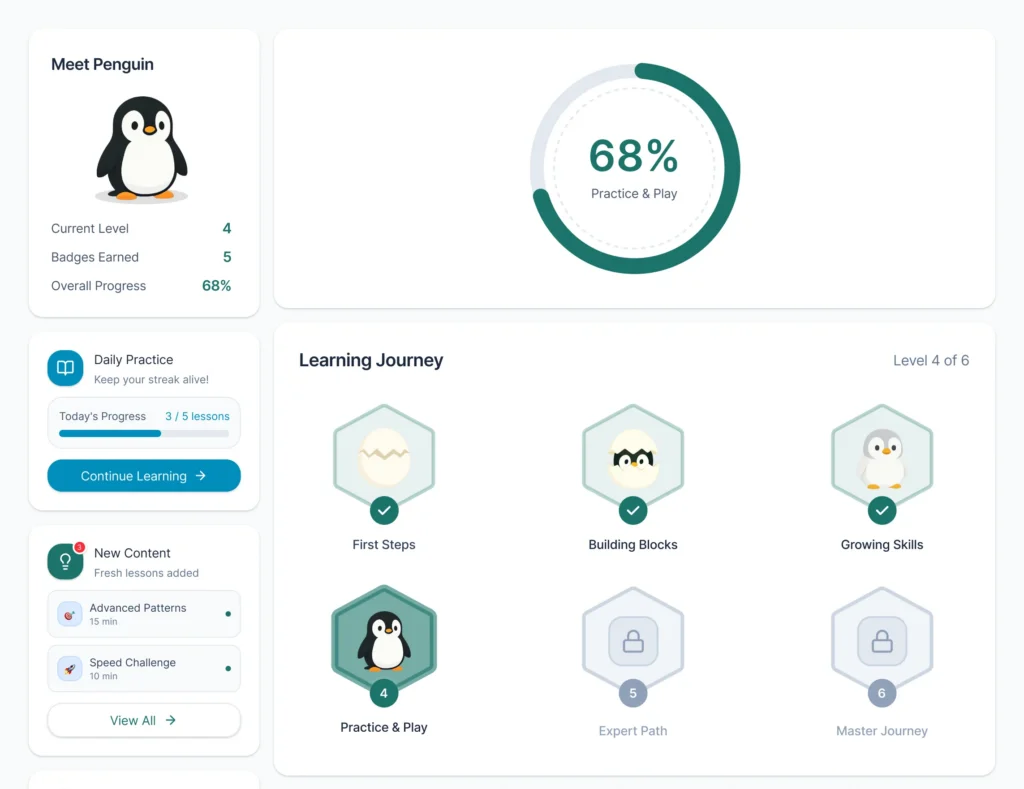
Most requests cover points, badges, leaderboards, levels, streaks, rewards, team challenges, quizzes, progress tracking, and notifications. Which combination works depends on what your people respond to, and the LMS gamification features guide walks through how each one behaves in practice. Mechanics get selected during discovery from your own participation records.
How long does it take to build a custom gamification module?
Scope, the number of mechanics, and the depth of connection into your setup drive the timeline. A typical build runs:
- 3 to 5 months from discovery through to launch
- Closer to 3 for a focused set of tools on one system
- Closer to 5 when several systems exchange data both ways
Discovery produces a dated plan before development starts.
Can gamification features integrate with our existing LMS or training platform?
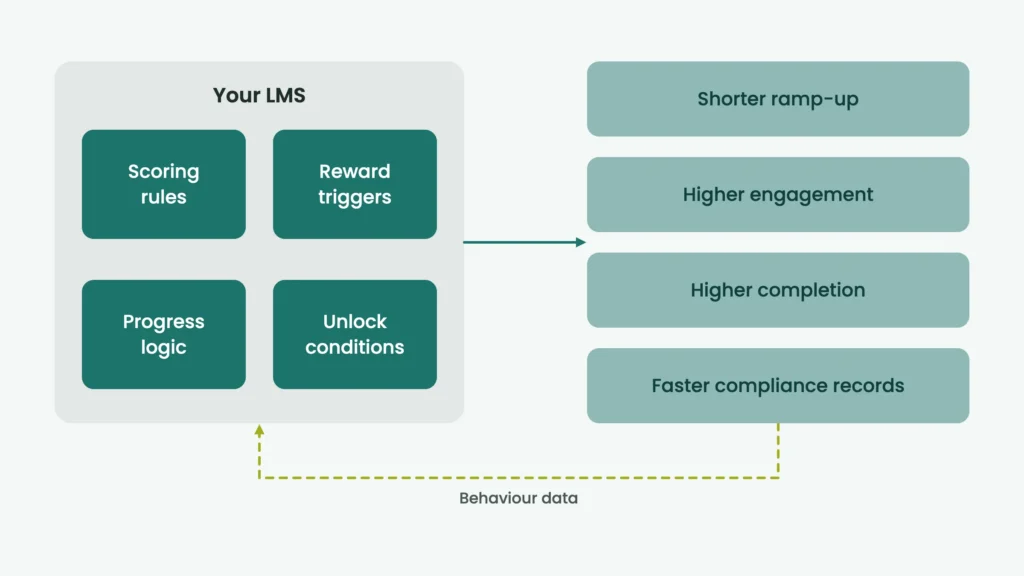
Yes, through published standards and APIs, with data moving both ways. Activity statements travel over xAPI, so a completed challenge lands in your reporting alongside course records. CRM and SIS connections already run in our work, including Salesforce, Slate, Ellucian, and Workday. Scoping starts with an audit, described under LMS integration.
What is the cost to add gamification to an e-learning or corporate training platform?
Feature count and connection depth set the range. Typical figures:
- $50K–$75K to start, for a defined set of features
- Higher as systems, roles, and reward logic multiply
- Detailed breakdown produced at discovery, once requirements are clear
Weigh the number against training ROI on the programs affected, since finish rates and ramp-up time both carry a cost today.
Which engagement mechanics work best for corporate training vs. academic e-learning?
Workplace programs respond to team challenges, habit loops built on streaks, and recognition tied to performance. Certification training adds renewal prompts and stage gates that mark verified progress. Academic settings do better with progress visibility, levels, and mastery-based rewards. Which set holds up gets tested against your real participation data, and e-learning gamification is tuned from what that shows.
How do you measure the impact of gamification on learner engagement and training completion?
Baselines get captured before launch, so every later number has something to compare against. Work on gamification for training is then tracked on finish rates, time-to-complete, return frequency, assessment scores, and drop-off points. Cohorts running with the mechanics are compared against those without. Rules get adjusted from what the comparison shows.
How does post-launch support work for gamification features?
Monitoring runs on the metrics defined at discovery. Rule tuning follows the data, since reward thresholds that worked at launch often need moving after a quarter. New mechanics go onto a roadmap you set the priorities for. Version compatibility with your learning system is maintained, and support terms are agreed in an SLA.
How is AI used to personalize gamification in modern LMS platforms?
Models read how someone moves through a module and adjust difficulty to their pace. Next-step recommendations follow from what they finished and where they slowed. Reward pacing personalises the same way, so incentives arrive when they still register. Behavioral signals flag fading interest early, giving your team time to act before someone stops logging in.
Can AI-driven gamification improve training completion rates and reduce onboarding time?
The mechanism is straightforward: stall points get identified, then pace and incentives adjust per person. New hires stop waiting on content that no longer matches what they know. Whether that shows up in your numbers depends on your baseline and cohort, which is why corporate gamification work starts with measurement rather than assumptions.