


NetherlandsThe impact of the new CMS has been huge. There is more harmony and efficiency, and we have higher-quality components than before. This also allows us to work better together across the company.
We build OTT solutions across the full OTT software development lifecycle, from initial strategy to post-launch optimization.
Custom OTT App Development
Your business model determines the platform architecture. Subscription streaming works differently than pay-per-view events or ad-supported content: different revenue flows, different user expectations, different technical requirements. We design around how your audience actually behaves, then build the infrastructure to support growth when your user base doubles or triples.
OTT Mobile App Development
Mobile apps need to handle video playback smoothly while managing battery drain and data usage — users notice when an app kills their phone in an hour. iOS and Android have different performance quirks. We build for both, including offline downloads and push notifications that actually matter to viewers, not just generic “new content available” spam.
Live Streaming Integration
Live broadcasts don’t tolerate failure. Traffic spikes happen when thousands of people join simultaneously (sports finals, concert premieres, breaking news), and your infrastructure either handles it or crashes spectacularly. We integrate low-latency streaming with failover systems and monitoring tools. Backup streams kick in automatically when the primary feed has issues.
OTT App Development Service for Smart TV
Smart TVs aren’t just big phones. Remote control navigation completely changes how users browse content, screen sizes demand different layouts, and each platform, such as Apple TV, Roku, Android TV, or Samsung Tizen, has its own certification requirements and technical constraints. We develop native apps for each ecosystem and test on older TV models, because not everyone owns this year’s hardware.
OTT Platform Development Services
Platform development means video encoding pipelines, CDN orchestration, content management systems, user authentication — the entire backend stack that makes streaming actually work. High traffic requires architecture designed for redundancy. We plan scalability from the beginning, not as an expensive retrofit six months after launch when your servers are melting under load.
UI/UX Design
Good OTT interfaces make content discovery feel effortless while keeping favorites immediately accessible. Users shouldn’t hunt through three menus to find the continue-watching section. We build wireframes, test navigation flows with real users, and iterate based on behavior patterns. Every design choice focuses on reducing the gap between opening the app and pressing play.
OTT App Testing and Optimization
In OTT software development, testing covers devices, OS versions, network conditions, screen resolutions — the full compatibility matrix where things break in weird ways. Load testing simulates thousands of concurrent viewers to see where performance degrades. We profile bottlenecks in playback startup, API response times, content loading. Fixing issues before launch beats apologizing to angry users after.
OTT Product Strategy & Consulting
Strategy starts with competitive analysis: what’s working in your market, what’s failing, where gaps exist. Audience research reveals actual viewing habits rather than assumptions. Monetization modeling determines sustainable pricing tiers. We prioritize features based on user needs and technical reality, not wishful thinking. Business model validation happens early, before you’ve built something nobody wants to pay for.
Video Players & Playback
Custom video players include adaptive bitrate streaming that adjusts quality based on network speed, DRM encryption for licensed content, subtitle support, and offline viewing. Buffering destroys retention — users leave when playback stutters. We optimize for varying connection speeds and implement quality switching that happens invisibly, without interrupting what someone’s watching.
OTT Migration & Modernization
Migrating from legacy systems while keeping your service running requires phased rollouts and careful coordination. Downtime during migration means lost viewers and revenue. We move content libraries, user data, viewing histories without service interruptions. Modernization updates codebases to current frameworks and rebuilds infrastructure to handle traffic growth more efficiently—because your old system is probably showing cracks.
QA, Performance & Observability
Load testing shows whether your platform survives traffic surges during popular releases or live events; theory meets reality here. Monitoring systems track performance metrics, error rates, playback quality across regions in real time. When problems emerge, observability tools help diagnose root causes faster. Is it CDN routing? Device-specific playback bug? Server capacity? You need to know immediately, not three hours later.
Sports streaming needs different infrastructure than e-learning or news broadcasts since audience behavior varies while technical demands shift. As an OTT platform development company, we build custom platforms around how your users actually watch content:

Streaming architecture uses HLS, DASH, and CMAF — protocols that sound like alphabet soup but determine whether your video actually plays smoothly. Multi-CDN orchestration routes content through whichever network is fastest for each viewer’s location and current traffic load. High availability becomes critical when everyone hits play at once during a live event. Latency matters too. A 30-second delay on “live” sports streaming? Users notice immediately.
Content protection starts with DRM (Digital Rights Management) encryption: Widevine for Android, FairPlay for Apple, PlayReady for Windows. Only authenticated users can actually decrypt and watch. Watermarking and fingerprinting work differently. They embed invisible markers into each person’s stream. When pirated content shows up online, those markers trace back to whichever account leaked it.
Regulations depend on where your users live and how old they are. GDPR for European audiences, CCPA for California, COPPA if you have viewers under 13, SOC 2 for enterprise clients who audit your security. Authentication through SAML or OAuth keeps accounts secure. Privacy laws shift constantly. Your architecture needs room to adapt without tearing everything down and rebuilding.
Start by defining what you’re actually measuring: engagement rates, content completion percentages, average session duration, or free-to-paid conversion. Stick to the metrics that inform real decisions, not vanity numbers that look good in reports. We establish data taxonomy and tracking systems that starving for insights.
AI recommendations analyze watch history, browsing patterns, hesitation before clicks—predicting what users might enjoy next. Search handles how people actually look for content: misspellings, partial titles, actor names, vague requests like “that show with the detective.” AI interprets these imprecise searches and still surfaces relevant results. Users rarely remember exact titles.
Analytics spot at-risk users before they cancel, declining watch frequency and browsing without playing anything. Cohort analysis reveals which user segments stay subscribed and which bail after free trials end. Lifetime value modeling answers the expensive question: how much should we spend acquiring new customers versus keeping existing ones happy?
Media companies need OTT platforms that handle VOD libraries, live broadcasts, and catch-up TV without looking like generic white-label solutions. We build fully branded platforms that integrate with your existing content management systems, licensing databases, advertising servers. You control monetization strategy, viewer data, and content rights.
Sports streaming lives or dies on latency. A 10-second delay means fans hear their neighbors cheering before they see the goal. We build low-latency infrastructure with interactive features, including live stats, multiple camera angles, instant replays which users control themselves. Traffic spikes during major events are guaranteed. Your platform scales accordingly.
Breaking news can’t wait for your CDN to catch up. Digital publishers need platforms that push live updates instantly and adapt layouts for phones, tablets, desktops without manual reformatting. Analytics show which stories hold attention, where viewers drop off, what topics drive subscriptions. Speed and engagement — both matter equally here.
Audio streaming has different technical demands than video: smaller files but higher expectations for offline reliability and playlist management. We build platforms supporting live radio streams, on-demand episodes, curated playlists, dynamic ad insertion that doesn’t interrupt mid-sentence. Radio broadcasters transitioning to digital need the same reliability they had on FM, just delivered over the internet.
E-learning platforms combine video infrastructure with interactive elements that traditional streaming doesn’t need, such as progress tracking, quizzes embedded in lessons, completion certificates, discussion forums. Learner retention depends on engagement, not just video quality. Educational institutions need accessibility features, too: captions, transcripts, adjustable playback speeds for different learning styles.
Brands want direct audience relationships without relying on YouTube’s algorithm or Instagram’s changing policies. We build OTT apps for product demonstrations, how-to content, behind-the-scenes footage, ad campaigns you actually control. Analytics track which content drives conversions, not just views. Retailers use these platforms to connect products with lifestyle content, showing items in context rather than just listing specs.
Adaptive bitrate streaming for uninterrupted viewing.
Fast and secure content delivery to global audiences.
Simplify your video library management. Help users find what they are looking for quickly and easily.
Cater to a wider audience by offering content in multiple languages.
Offer hassle-free payment options to suit various user preferences.
Allow users to download content for offline access.
AI-based content suggestions based on user behavior.
Enable users to share their favorite content on social media platforms.
Allow users to save content for later and receive reminders.
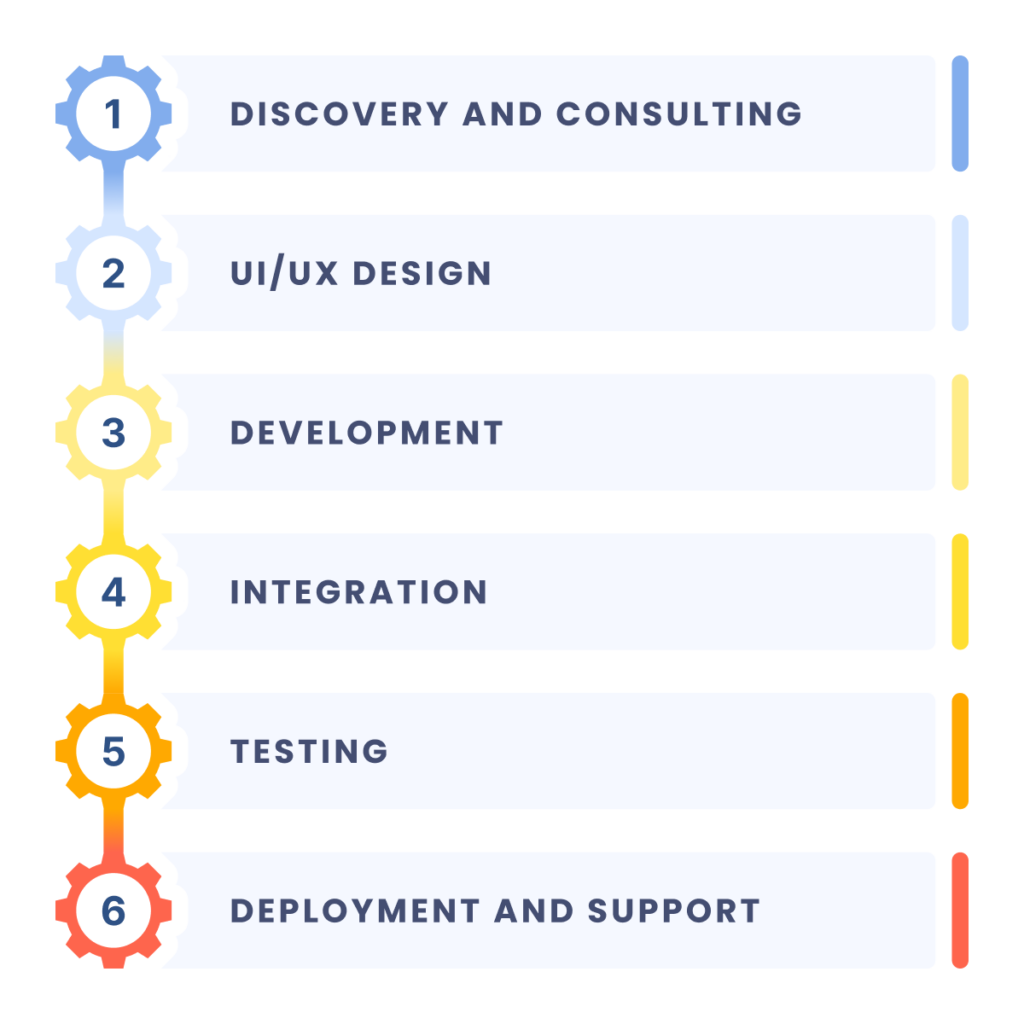
We follow a proven OTT platform app development process to deliver your solution on time and on budget:
We start by understanding your goals, target audience, business model, market landscape, and everything essential. We advise you on all your questions, determine the scope of the project, the technology stack, and the development roadmap.
Our designers create wireframes and prototypes to show you the final product. We build high-quality products that match your brand.
Our skilled OTT app developers build the application using the latest tech stack and industry best practices.
Seamlessly incorporate third-party services and tools.
Conduct thorough software testing to ensure a bug-free experience.
We ensure a smooth launch and provide ongoing support and updates, based on our OTT app developers’ expertise.

We’ve built platforms for live sports, on-demand education, news broadcasting, entertainment streaming. Different industries, different technical problems—but reliability under traffic spikes matters everywhere.
Strategy through post-launch support, all handled internally. You’re not juggling five vendors who point fingers when something breaks. One team. Fewer communication gaps.
Subscription streaming works differently than ad-supported content or pay-per-view events—different user expectations, different revenue mechanics, different technical requirements. We build around your actual business model, not a template.
Platforms crash during traffic spikes or they don’t. We build redundancy, monitoring systems, automated failovers. Not glamorous infrastructure work, but essential when your biggest live event of the year starts in ten minutes.
We use frameworks with active development communities and long-term support commitments. Choosing technology that’s still maintained five years from now saves you from expensive rewrites later. Ask us how we learned that lesson.
DRM frameworks, encrypted transmission, secure authentication, regular audits. Content piracy costs revenue. Data breaches cost reputation and legal fees. Prevention runs cheaper than damage control—significantly cheaper.
Streaming tech evolves fast. New codecs, protocol updates, shifting device capabilities. We track what’s genuinely useful versus marketing hype from vendors trying to sell unnecessary upgrades.
We’ve migrated legacy systems without downtime, integrated licensing databases across regions, scaled platforms from hundreds to thousands of concurrent streams. Experience helps when standard solutions don’t fit your specific mess—well, situation.
Payment processors, analytics platforms, ad networks, CRM systems, content moderation APIs. Integration requires understanding how different systems talk to each other and what breaks when external APIs change without warning. Which happens more often than vendors admit.
Depends on what you’re building. A standard OTT platform with basic features—video playback, user accounts, subscription management—typically takes 3-6 months. Complex customizations stretch that timeline:
The discovery phase comes first. We define architecture, feature scope, technical integrations, potential bottlenecks. This planning prevents expensive surprises six weeks into development when someone realizes the payment gateway doesn’t work in half your target markets.
Yes. Multi-device compatibility is standard, not optional—smartphones, tablets, web browsers, Smart TVs, game consoles. Each platform has quirks. iOS handles video differently than Android. Roku navigation works nothing like Apple TV. We build for these differences so performance stays consistent.
Smart TV ecosystems require native apps—Apple TV, Roku, Android TV, Samsung Tizen, LG webOS. Each has certification requirements and technical constraints. Game consoles add another layer: PlayStation and Xbox both support streaming apps but with platform-specific guidelines.
We do. Smart TV development means:
Gaming consoles follow similar patterns but with different approval processes. PlayStation and Xbox have strict submission requirements. We’ve navigated those before.
Three things determine whether platforms succeed or fade:
We help implement these from the start. Retrofitting personalization or scalability after launch costs significantly more than building it correctly initially.
The reason is control and flexibility. White-label solutions limit customization—you’re stuck with their feature set, their monetization options, their branding constraints. Fine for testing a concept quickly. Limiting when you want to differentiate.
Custom platforms give you:
White-label platforms charge ongoing fees and control your user data. Custom solutions have higher upfront costs but lower long-term expenses. You own the platform. It evolves with your business instead of forcing your business into someone else’s template.
AnyforSoft is your partner in creating innovative and engaging OTT platforms. Contact us today to start making your vision a reality.
let’s talk
Business Development Manager

CEO