








You may think that launching an online course is the only way to share your expertise. But we can say that it’s more about building a structured learning experience that engages, informs, and creates measurable value. The e-learning industry is booming. In 2024, the global e-learning services market was estimated at USD 299.67 billion, and projections suggest it could exceed USD 842.64 by 2030. This growth highlights both the opportunity and the competition you face when designing a course.
Learners and professionals worldwide are turning to online courses to upskill, reskill, and explore new areas of interest. If you’re an educator, consultant, or entrepreneur, this presents a significant opportunity: you can create a course that shares your expertise, builds credibility, and generates scalable revenue. More and more organizations are looking for effective ways to develop online training courses to meet learners’ growing expectations and deliver structured, interactive education experiences.
But here’s the reality: many online courses fail before they even launch. The problem isn’t the idea – it’s lack of structure, poor planning, and inadequate execution. That’s why a methodical approach to online course development is critical.
In this guide, we’ll walk you through every phase of building an online course: planning and validating your idea, designing content, producing materials, setting up the platform, marketing, engaging learners, and scaling for long-term growth. By the end, you’ll know exactly how to go from “I should make a course” to “My course is live and attracting students.” Let’s explore how to develop an online course.
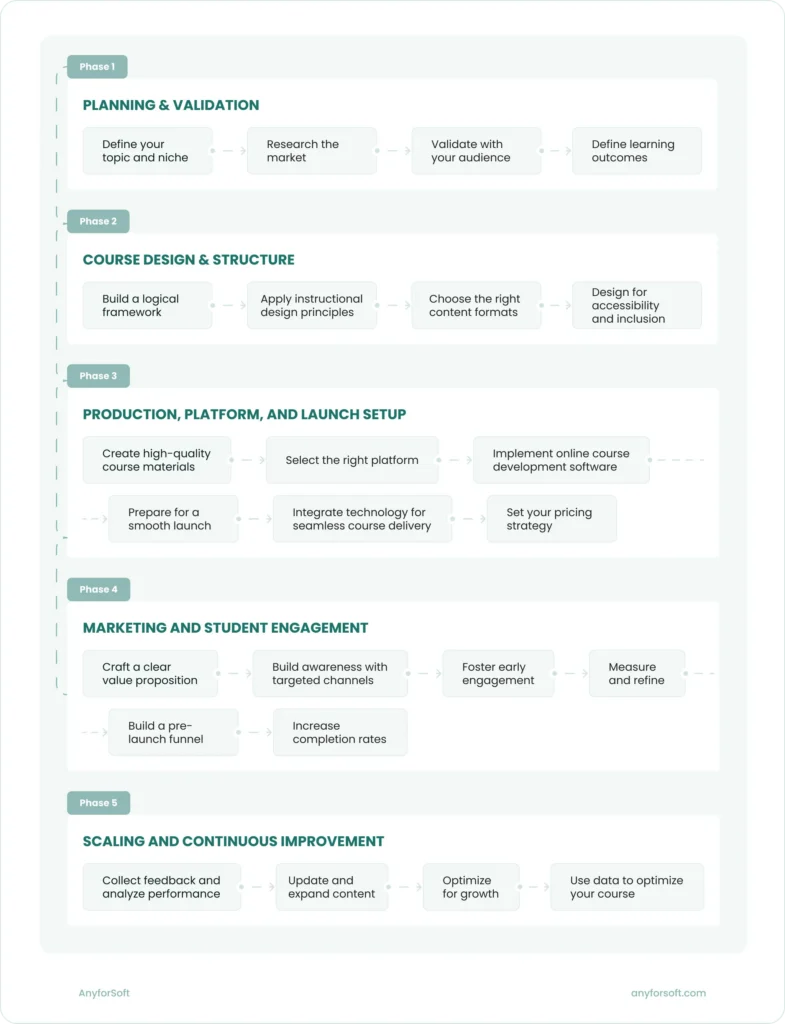
Phase 1: Planning & Validation
Before you record a single lesson, you need to validate your course idea. Jumping straight into production without a clear plan is the fastest way to waste time and resources. Here’s how to set yourself up for success.
Define your topic and niche
Start by asking yourself three key questions:
- What do I know well enough to teach? Look for areas where you have both expertise and real-world experience.
- What does my audience want to learn? Focus on problems learners actively want to solve.
- What’s the market potential? Consider if people are willing to pay for the solution your course provides.
An ideal topic lies at the intersection of your skills, passion, and demand. Instead of creating a broad course like “Digital Marketing,” consider something specific: “Instagram Ads for Local Businesses.”
Research the market
Validation begins with data. Explore competitor courses on platforms like Udemy, Coursera, or Thinkific. Take note of:
- Popular topics and recurring themes.
- Student reviews (what they love vs. what’s missing).
- Price points and course lengths.
This research helps you spot opportunities — such as underserved niches or content gaps you can fill while you develop online course material.
Validate with your audience
Don’t rely on guesswork. Use one or more of these methods to test interest:
- Surveys and polls: Ask your email list or social media followers what they struggle with most.
- Pre-selling: Create a simple landing page, describe your course, and allow early sign-ups or discounted pre-orders.
- Pilot workshops: Host a free or low-cost webinar to gauge demand and refine your teaching approach.
If people sign up (or better yet, pay in advance), you’ve got proof that your course is worth building.
Example: Before launching her Instagram Ads course, a creator hosted a free webinar to gauge interest. Strong engagement confirmed the demand, leading to a profitable course launch.
And the opportunity is undeniable: Coursera alone now reports more than 148 million registered learners worldwide – proof that demand for well-designed courses has reached global scale.
Define learning outcomes
Finally, get crystal clear on what success looks like for your students. Instead of vague goals like “learn Photoshop,” aim for measurable results: “Design a professional logo using Photoshop in under two hours.” Clear outcomes make your course appealing and guide the rest of your online course design and development process.
⤴️Learn more about LMS consulting to align your course with your broader learning strategy.
Phase 2: Course Design & Structure
You have formed your idea, validated it, and done everything necessary to move on to the next stage. Of course, you cannot proceed without a clear learning path. This requires both your creativity and good strategy.
Just think about designing a house: you wouldn’t start construction without knowing where the walls, doors, and windows belong. The same applies to developing online courses — a strong structure keeps students engaged and ensures they reach the outcomes you promised.
Build a logical framework
Break your course into modules (major milestones) and lessons (smaller steps). Each lesson should build on the last:
- Keep modules focused; split if too long.
- Sequence lessons so skills develop progressively.
- Make sure each lesson supports the course’s learning outcomes.
Apply instructional design principles
You don’t need to be an academic to benefit from proven frameworks. Models like ADDIE (Analyze, Design, Develop, Implement, Evaluate) or backward design (start with outcomes, then plan content) keep your structure learner-centered.
The goal isn’t to overcomplicate things. It’s to ensure your content is intentional, not just a series of recorded lectures. A well-structured course motivates learners to continue, reduces dropout rates, and positions you as a professional educator rather than just a subject expert.
Choose the right content formats
Different learners absorb information differently. Some learners thrive on video demonstrations, while others prefer step-by-step written guides. The best courses use a mix.
- Video: Great for demonstrations, storytelling, and building personal connections
- Text/PDFs: Ideal for reference materials and step-by-step instructions.
- Quizzes/assignments: Reinforce knowledge and give learners a sense of progress.
- Interactive elements: Case studies, simulations, or discussion forums foster deeper engagement.
The right blend depends on your learners’ preferences, your teaching style, and your resources. For example, a coding course may lean heavily on hands-on assignments, while a design course may rely more on visual demonstrations – both excellent approaches for building an online course that stands out.
Recommended tools for online course development
When creating engaging lessons, the right software can make the process smoother and more efficient. Here are some popular options worth considering:
- Video editing and production: Camtasia, Loom, Canva, Adobe Premiere Rush
- Slide creation: Canva, PowerPoint, Google Slides
- Interactive content: Articulate Rise, H5P, Adobe Captivate
- Assessment and quizzes: Google Forms, Typeform, or built-in LMS tools
Choosing tools that balance ease of use with professional output helps maintain consistent quality across your course.
Design for accessibility and inclusion
An often-overlooked part of online course design and development is accessibility. Accessible courses reach more learners and demonstrate professionalism. Make your content easy to navigate, readable on multiple devices, and usable by learners with different needs.
- Add captions to videos.
- Use simple layouts that work well on mobile.
- Provide transcripts or alternative formats where possible.
These steps not only widen your reach but also show respect for every learner’s experience.
Phase 3: Production, Platform, and Launch Setup
At this point, your course has a validated idea and a solid structure. Now comes the part most creators find both exciting and intimidating: bringing it to life. Production is where your content takes shape, while your platform setup determines how learners interact with (access, navigate, and enjoy it). This phase is central to developing an online course that delivers a seamless and professional learning experience.
Create high-quality course materials
Content production doesn’t have to mean expensive studio setups, but it does require attention to detail. Learners judge the professionalism of your course by both the clarity of your teaching and the quality of your materials.
- Video production: Use a decent microphone and proper lighting; good audio matters more than perfect visuals. Record in a quiet space to minimize distractions.
- Slides and visuals: Keep them simple, consistent, and free of clutter. Use visuals to reinforce, not overwhelm, your explanations.
- Supporting resources: Provide templates, checklists, or downloadable guides to add value and encourage application.
Tip: Don’t aim for Hollywood-level production. Aim for clarity and consistency. Students care more about learning outcomes than fancy effects – a mindset that helps you develop online course materials that are effective and learner-focused..
Select the right platform
The platform you choose directly impacts your learners’ experience and your workload. Options fall into three broad categories:
- Course marketplaces (e.g., Udemy, Skillshare): Easy entry, built-in audiences, but limited control over branding and pricing.
- Learning Management Systems (e.g., Thinkific, LearnWorlds): Balanced option with flexibility, scalability, and customization.
- Custom solutions or online course website development: Best for those who want full control, advanced features, or integration with existing systems.
When evaluating, consider:
- Ease of use for both you and your learners.
- Scalability if your course or business grows.
- Support for interactive tools, payment gateways, and analytics.
For businesses and institutions, partnering with online course development companies can save time and ensure your platform aligns with long-term growth goals.
Implement online course development software
Behind every great platform is the right software stack. Whether you choose an LMS, an authoring tool like Articulate or Captivate, or custom-built software, your choice should match your course goals.
- Look for drag-and-drop design features if you’re not technical.
- Prioritize tools with built-in analytics so you can track learner progress.
- Check for integration with CRM, email marketing, or HR systems if scaling is part of your plan.
Prepare for a smooth launch
A great course can fail if the launch is an afterthought. To maximize your impact:
- Test the platform: Run a beta version with a small group. Gather feedback on navigation, clarity, and technical issues.
- Set up pricing and enrollment options: Decide between one-time payments, subscriptions, or tiered access.
- Plan your communication: Announce your course across channels, but frame the launch as solving a real learner problem, not just selling a product.
Your launch is more than a start date. It’s the first impression learners will carry with them – and the foundation for long-term trust.
Integrate technology for seamless course delivery
Technology supports the learner experience. It’s essential to ensure your platform is well-connected. Focus on systems that can:
- Integrate with your CRM, email marketing, and analytics platforms.
- Automate reminders, track progress, and deliver certificates.
- Scale easily when your audience grows or your content library expands.
If you need a tailored solution, working with online course development companies can help you create a platform that meets both technical and business needs.
Set your pricing strategy
A strong pricing model positions your course competitively while also supporting long-term growth. Common approaches include:
- One-time payment: best for standalone courses or evergreen content.
- Subscription or membership: ideal for continuous learning and updates.
- Tiered access: different levels of content or support at varied price points.
Early-bird offers and pre-launch discounts: effective for building momentum and validating demand.
Whichever approach you choose, test it, gather feedback, and adjust based on what you learn about your audience’s willingness to pay.
Phase 4: Marketing and Student Engagement
Building your course is only half the journey. To succeed, you need to attract the right learners and keep them engaged from the first lesson to the last. A smart marketing plan and an intentional engagement strategy will help your course deliver real impact – and ensure students stick with it.
Craft a clear value proposition
Your marketing starts with a simple but important question: Why should someone choose your course over all the others?
- Highlight specific outcomes learners will achieve (e.g., “Launch your first paid ad campaign in 30 days”).
- Show credibility with your background, client results, or success stories.
- Address pain points directly – make it clear how your course removes obstacles learners face today.
This clarity should guide your course website, promotional emails, and even your course description.
Build awareness with targeted channels
Different audiences gather in various places, so meet them where they are.
- Email marketing: Build a list early with lead magnets like free guides or webinars.
- Social media: Share short, actionable content that positions you as an authority.
- Partnerships: Collaborate with influencers, guest podcasts, or affiliate partners to reach new audiences.
- Paid ads: Use them strategically if you have a validated offer and budget.
Tip: Consistency is more effective than intensity. A steady drumbeat of communication builds trust over time.
Foster early engagement
Once learners enroll, the real work begins: keeping them motivated. Online courses often struggle with high dropout rates – but you can reduce this with smart design.
- Welcome emails/videos: Set expectations and build excitement.
- Gamification: Add progress trackers, badges, or small rewards.
- Community spaces: Use discussion boards, private groups, or live Q&A sessions to create connections.
- Frequent feedback: Offer short quizzes, polls, or reflection prompts to keep learners active.
The goal is to transform passive viewers into active participants. When learners feel supported and part of a community, they’re more likely to complete the course – and recommend it to others.
Measure and refine
Marketing and engagement don’t stop at launch. Monitor data and adjust.
- Analytics: Track enrollment rates, completion percentages, and learner feedback.
- Surveys: Ask students what’s working and what could improve.
- Iterative updates: Add or refine lessons based on learner needs.
A continuous improvement mindset keeps your course relevant and competitive.
Build a pre-launch funnel
A successful launch doesn’t happen overnight; it requires a plan to attract and warm up potential learners before your course goes live. Effective steps include:
- Creating a landing page that highlights learner outcomes and your expertise.
- Offering free resources such as checklists, mini-courses, or guides to grow your email list.
- Setting up email sequences to build anticipation and provide value in advance.
- Tracking engagement metrics to see which messaging resonates most.
A structured funnel not only increases enrollments but also builds interest.
Increase completion rates
Keeping learners engaged until the end of your course is just as important as attracting them in the first place. Some proven techniques are:
- Offering personalized learning paths that match pace and preferences.
- Building in peer feedback, group projects, or mentorship opportunities.
- Using certificates, badges, or gamification elements to recognize progress.
These strategies help maintain motivation, reduce dropout rates, and improve the perceived value of your course.
Phase 5: Scaling and Continuous Improvement
Launching your course is an achievement – but the journey doesn’t end there. To maximize impact and return on investment, it’s important to think long-term: refine content, expand reach, and optimize operations.
Collect feedback and analyze performance
Student feedback is your most valuable tool. Use surveys, discussion boards, and course analytics to understand what works and what needs improvement.
- Identify lessons or modules where learners struggle.
- Measure completion rates, engagement levels, and satisfaction scores.
- Track which marketing channels bring in the most qualified students.
Regularly reviewing this data allows you to make targeted improvements and enhance the overall learning experience.
Update and expand content
Keep your course fresh and relevant:
- Refresh outdated material or industry-specific examples.
- Add bonus modules, case studies, or advanced lessons.
- Introduce new formats, such as interactive simulations or live Q&A sessions.
Expanding content not only improves learner outcomes but also encourages past students to revisit and recommend your course.
Optimize for growth
Scaling is about reaching more learners without sacrificing quality. Consider:
- Automating administrative tasks (enrollments, reminders, grading).
- Integrating with other tools such as CRM, email marketing, or analytics platforms.
- Partnering with affiliates, organizations, or online course development companies to extend reach.
By refining processes and leveraging technology, you can focus on what matters most: delivering exceptional learning experiences.
Use data to optimize your course
Improvement doesn’t end with launch. Data and feedback provide insights to make your course better over time. Consider focusing on:
- Tracking KPIs such as completion rates, quiz scores, and discussion activity.
- Running A/B tests to evaluate lesson formats, video length, or module sequence.
- Collecting learner surveys to identify content gaps or advanced topics to add.
- Visualizing performance with analytics dashboards to spot trends quickly.
By treating online training course development as a continuous cycle of iteration, you ensure your course remains relevant, effective, and in line with learner needs.
Conclusion
Creating a online course requires more than passion – it demands careful planning, thoughtful design, diligent production, strategic marketing, and ongoing refinement. By following this step-by-step approach, you can move from a course idea to a fully realized, engaging, and scalable learning experience.
Every phase builds on the last: a validated idea informs a strong course structure, high-quality materials enhance delivery, effective marketing drives enrollment, and continuous improvement ensures long-term success. With the right approach, your course can not only reach learners but also transform their skills and confidence.
If you’re ready to take your online course development to the next level, the AnyforSoft team can help. We specialize in designing, building, and scaling e-learning platforms tailored to your goals, ensuring your course delivers real value to learners and stands out in the market.
Contact the AnyforSoft team today to discuss your course vision and discover how we can bring it to life.